Paweł Feliński
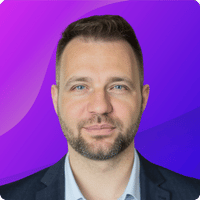
Head of Delivery | Advisor to the Board
Primotly
Poland
About
Paweł believes that strategy means nothing without execution. For him, business is about connecting purpose with delivery – turning ideas into outcomes through clarity, accountability, and pragmatic decision-making.Over the past several years, he has worked as a management consultant, advising organisations of different sizes — from start-ups and scaling companies to large international enterprises. Working across more than 15 countries on four continents, Paweł has helped leaders and teams improve the way they deliver products, manage change, and align execution with business goals.His experience spans industries including oil and gas, pharma, healthcare, finance, education, retail, telecom, and IT. Whether working with executives, delivery organisations, or product teams, he focuses on creating environments where transparency, ownership, and continuous improvement lead to sustainable results.Today, as Head of Delivery at Primotly, Paweł combines hands-on operational leadership with consulting experience to guide the company and help its clients discover better ways to make their products happen.
Talk
Paweł Feliński | Streamlining Communication: A Brain-First AI Approach
AI, Information, Workflows, Optimization
In a remote-first software house, meetings and asynchronous chats quickly become the backbone of communication. As every new tool suddenly becomes “AI-powered”, instead of following the usual “AI everywhere” trend, Paweł Feliński and his team took a brain-first approach: first understanding how knowledge actually moved through the organisation, and only then deciding where AI could genuinely help.That led to an unexpected discovery: many recurring agile “ceremonies” existed mainly to move information from one person to another.Once they started treating organisational knowledge as an operational problem, not just a documentation problem, several things changed quickly. Post-meeting note-taking disappeared. Developers stopped joining estimation sessions by default. Specifications became asynchronous, reviewable, and easier to evolve. Some meetings became shorter. Others vanished entirely. What disappeared were not feedback loops or collaboration, but the manual overhead around them.To support this, the team built a lightweight, LLM-agnostic internal knowledge layer designed around their actual delivery workflows rather than generic AI productivity demos.Not every experiment worked. In several cases, removing a ceremony also removed hidden coordination value they had not noticed before.This talk is a practical before/after case study of how a growing software company used a brain-first AI approach to reduce coordination overhead — and discovered that many agile “ceremonies” existed mainly to compensate for broken knowledge flow.