| Day | Start | End | Conference | Format | Stage | Speaker | Session | Position | Company | Keywords | Session description | ||||||
|---|---|---|---|---|---|---|---|---|---|---|---|---|---|---|---|---|---|
| 2026-11-27 11:20 - 12:05 (GMT+2) | 2026-11-27 | 11:20 | 12:05 | Big Data Conference | Talk | Data Value & Trust | The Data Product Factory |  | Hannes De Smet | The Data Product Factory | Hannes De Smet | Data Engineer | Dataminded | Belgium | Data Products, Platform Engineering, Data Platform Automation, Data Mesh | Data products are undoubtedly a hot topic in the tech world, but how can enterprises truly empower developers to build them effectively? In this session, Hannes De Smet introduces the “Data Product Factory” concept - a practical framework for creating tools that serve as blueprints to guide developers through the complexities of building data products. Rather than merely adding tools to an already crowded technology stack, this session explores how to achieve real platformisation by turning a disjointed “basket of fruit” into a cohesive “fruit salad” for engineering teams. Hannes will share insights from his work at Dataminded, demonstrating how his team builds enabling tools that allow developers to thrive and foster truly data-centric organizations. | Hannes De Smet is a Platform Engineer at Dataminded. He enjoys tackling challenging technical problems and is endlessly curious about a wide range of topics. Outside of coding, Hannes spends his time drawing, playing sports, and pondering how to create more time in the day. | hannes-de-smet-the-data |
| 2026-11-25 14:45 - 15:30 (GMT+2) | 2026-11-25 | 14:45 | 15:30 | Big Data Conference | Talk | Data in Motion | One Pipeline, Endless Possibilities - How Configuration Drives the Modern Data Architecture |  | Cvetanka Eftimoska | One Pipeline, Endless Possibilities - How Configuration Drives the Modern Data Architecture | Cvetanka Eftimoska | Senior Technical Consultant | Senior Data Engineer | IWConnect | North Macedonia | Data Pipelines, Pipeline Automation, Data Architecture, Data Engineering | Modern data is fast, complex, and constantly changing. Traditional pipelines struggle to keep up, leaving teams overwhelmed and projects delayed. In this session, Cvetanka Eftimoska explores a new approach - a single, dynamic pipeline driven by configuration, not code. She invites the audience to imagine adding new data sources, adjusting workflows, or scaling operations without rewriting a single line. She demonstrates how to design platforms that are flexible, future-proof, and resilient, while keeping governance and data quality at the core. This isn’t just theory - it’s about turning a data platform into a centralized engine that adapts to evolving business needs. Attendees will learn how to reduce duplication, accelerate onboarding, and make complex data landscapes simple and manageable. By the end of the session, participants will understand how one well-designed pipeline can handle diverse data challenges, unlocking speed, efficiency, and agility. Cvetanka presents a forward-looking vision of data architecture, demonstrating how configuration-driven design can enable scalable and adaptable systems. | Cvetanka Eftimoska is a seasoned data professional with strong expertise in data engineering, master data management, and data warehousing. She specializes in designing scalable, end-to-end data solutions that turn raw data into meaningful business insights. With a focus on automation, governance, and modern data architectures, she builds reliable data platforms that support strategic decision-making. As a conference speaker, she enjoys sharing her practical experience and best practices, bridging the gap between complex data systems and real business value. | cvetanka-eftimoska-one-pipeline |
| 2026-11-26 14:45 - 15:30 (GMT+2) | 2026-11-26 | 14:45 | 15:30 | AI Summit | Talk | Agent Foundry | AI-Driven Document Processing for Rapid Results |  | Eduard Shlepetskyy | AI-Driven Document Processing for Rapid Results | Eduard Shlepetskyy | CEO | ECTIVE Automation | Slovakia | Intelligent Document Processing, LLMs, Information Extraction, Workflow Automation | AI is transforming industries - and document processing is no exception. Modern AI systems take extraction to a new level of precision, drastically reduce training effort, and enable idea-to-production cycles within a single business day. In this session, Eduard Shlepetskyy shows how organizations can move beyond templates and rule-based systems toward adaptive, learning-driven document intelligence. Through a live demonstration, attendees will see how structured data can be extracted from complex, unstructured documents in minutes - without lengthy setup or heavy IT projects. The talk also addresses enterprise essentials such as accuracy, governance, and human validation, providing a practical framework for scaling AI-powered document processing sustainably. | Eduard Shlepetskyy is the CEO of Ective Automation and a digital transformation expert specializing in intelligent automation and AI-driven process optimization. Recognized as a Forbes 30 Under 30 honoree and four-time UiPath MVP, he helps organizations identify high-impact automation opportunities and deliver measurable ROI through RPA, AI, and process improvement. Eduard works closely with enterprises across Europe and the U.S., combining technical expertise with a strong consulting mindset to drive sustainable operational excellence. | eduard-shlepetskyy-ai-driven-document |
| 2026-11-24 09:00 - 17:00 (GMT+2) | 2026-11-24 | 09:00 | 17:00 | Big Data Conference | Workshop | Spark Pipeline Optimization |  | Ammar Chalifah | Spark Pipeline Optimization | Ammar Chalifah | Senior Data Engineer | Modash | Estonia | Apache Spark, Data Pipelines, Performance Optimization, Query Optimization | 1. Abstract In this workshop, Ammar Chalifah will cover best practices for optimizing a Spark job, from reading the physical plan, minimizing shuffle and skew, avoiding UDFs, choosing the right storage format and storage layout, and right-sizing the cluster. 2. Agenda
3. Objectives 4. Target audience and Prerequisites
| Ammar Chalifah is a data engineer focused on building scalable, optimized data pipelines. He has reduced compute costs and wall-clock time through compute and storage tuning, generating more than €1 million in savings for the organizations he has worked with. He currently builds an influencer-marketing platform at Modash. | ammar-chalifah-spark-pipeline | |
| 2026-11-24 09:00 - 17:00 (GMT+2) | 2026-11-24 | 09:00 | 17:00 | Big Data Conference | Workshop | Building a GenAI-Ready Lakehouse on AWS: From Relational Data to RAG-Optimised Datasets |  | Kate Gawron | Building a GenAI-Ready Lakehouse on AWS: From Relational Data to RAG-Optimised Datasets | Kate Gawron | Data Cloud Architect | Author | App Builder | DoiT | UK | Lakehouse, Generative AI, AWS, Apache Iceberg, RAG | Most organisations want to build GenAI applications, but their data platform wasn’t designed for it. Relational databases and data warehouses are excellent for structured analytics, but GenAI introduces new requirements: handling unstructured content, supporting rapid iteration, enabling governed access to sensitive datasets, and producing “retrieval-ready” data that can power search and RAG workflows. In this 6-hour hands-on workshop, participants will build a GenAI-ready lakehouse on AWS. We’ll start with a traditional relational dataset and a set of unstructured documents, then design a lakehouse architecture using Amazon S3, AWS Glue Data Catalog, Athena, and Apache Iceberg. Participants will implement ingestion and transformation patterns that create both analytics-friendly tables and GenAI-friendly datasets, including chunked text outputs, metadata enrichment, and quality checks that improve retrieval performance. The workshop is structured as a real end-to-end case study: we benchmark the starting point, build the lakehouse step-by-step, and demonstrate measurable outcomes such as faster dataset iteration, improved searchability, and better governance. Attendees will leave with reference architectures, a GenAI data readiness checklist, and templates they can apply immediately. | Kate Gawron is a database specialist and cloud architect who helps teams design and modernise data platforms on Amazon Web Services (AWS). She works with engineering organisations to move analytics workloads beyond traditional relational systems, building scalable architectures that combine data lakes, lakehouse patterns, and cloud-native services to deliver measurable improvements in performance, cost, and reliability.Kate regularly shares practical guidance through technical writing, workshops, and conference talks, with a focus on real-world trade-offs and implementation details rather than theory. | kate-gawron-building-a | |
| 2026-11-24 09:00 - 17:00 (GMT+2) | 2026-11-24 | 09:00 | 17:00 | Big Data Conference | Workshop | Data Testing of an ETL Pipeline |  | Michal Pilarski, Mateusz Adamczak | Data Testing of an ETL Pipeline | Michal Pilarski, Mateusz Adamczak | Software Tester | Data QA, Software Engineer | GISKI | Dynatrace | Poland | Data Testing, ETL, pytest, Apache Airflow, Data Quality | In the time of data-driven decision-making, the data validation of ETL (Extract, Transform, Load) pipelines is crucial for delivering high quality information. This study explores the design and testing of an ETL data pipeline built with Apache Airflow, Python Pandas, and Pytest. Airflow orchestrates pipeline workflows, ensuring transformation dependencies and scheduling are managed correctly. Pandas handles data manipulation, offering robust tools for efficient transformations. Pytest enables a structured framework for data attributes testing like reliability, accuracy, consistency, completeness and uniqueness. Overall, the presented approach demonstrates how integrating workflow orchestration, data transformation, and automated testing creates a reliable foundation for trustworthy analytics. By embedding validation directly into the ETL process, potential data quality issues can be detected early, reducing downstream risks and improving decision-making confidence. The combination of Airflow, Pandas, and Pytest provides a scalable and maintainable framework that supports continuous monitoring of data quality, highlighting the importance of test-driven practices in modern data engineering pipelines. | Throughout his career, Michal has always been connected to geospatial data and GIS geoprocessing. He enjoys identifying and overcoming challenges in testing Big Data with geometry attributes. He has experience in preparing testing strategies for ETL (Extract, Transform, Load) systems . His technology stack includes Python, Pytest, ArcGIS, QGIS, FME, Robot Framework, Selenium, Playwright, HP ALM, QTest, ReportPortal, Snowflake, DBT, Airflow, and GeoPandas . Additionally, he teaches young students Python coding in MinecraftWith around 12 years of experience in the software industry, Mateusz Adamczak has covered most of the key roles — tester, developer, DevOps engineer - and also served as a Scrum Master for a period of time.This diverse background gives him a comprehensive overview of the software development lifecycle, which he enjoys sharing with others. | michal-pilarski-mateusz-adamczak-data-testing | |
| 2026-11-24 09:00 - 17:00 (GMT+2) | 2026-11-24 | 09:00 | 17:00 | Big Data Conference | Workshop | ML and AI Strategy Cookbook |  | Marcin Szymaniuk | ML and AI Strategy Cookbook | Marcin Szymaniuk | CEO | Senior Data Engineer | International Conference Speaker | TantusData | Poland | AI Strategy, Machine Learning, Generative AI, AI ROI, Production AI, Data Governance, AI Governance | 1. Abstract During the course, Marcin Szymaniuk will minimise the focus on technical details and examine the topics through the lens of business and management. Participants will explore the substantial opportunities that big data solutions, ML, and large language models (LLMs) bring to business applications. The course will not shy away from the complexities involved. These include making practical choices about use cases, fine-tuning models to suit specific organisational needs, being mindful of costs, and addressing maintenance concerns. 2. Agenda
Pragmatic approach
Challenges within the organisation
Legal aspects and regulations
AI in production
Generative AI
| Specialising in helping clients monetise big data since the early 2000s, Marcin Szymaniuk leads a team of seasoned data engineers with expertise in data engineering, machine learning (ML), machine learning operations (MLOps), and cloud technologies.Marcin is adept at solving both non-standard challenges and everyday problems that require fast, practical solutions. His experience spans a wide range of industries and project sizes, with a strong focus on artificial intelligence (AI), ML, and deployment strategies.He has presented at numerous industry events, including Infoshare, J On The Beach, Devoxx, Huawei Eco-Connect Poland 2023, Berlin Buzzwords, Codestar, GeeCON, and Java Day Istanbul. | marcin-szymaniuk-ml-and | |
| 2026-11-24 09:00 - 17:00 (GMT+2) | 2026-11-24 | 09:00 | 17:00 | AI Summit | Workshop | How to Leverage AI During Product Discovery Without Sacrificing Real Innovation |  | Steffen Kastner | How to Leverage AI During Product Discovery Without Sacrificing Real Innovation | Steffen Kastner | Principal Product Manager | UnternehmerTUM GmbH/Digital Product School Munich | Germany | Product Discovery, Generative AI, Ideation, Product Innovation | When people bring AI into product innovation, they often end up with generic, safe, »average« outputs, because AI tends to regress to the mean. This workshop teaches you how to use generative AI specifically for problem discovery and ideation without falling into that trap. You'll bring your own real problem to work on, and see firsthand how AI can help you generate genuinely novel ideas, ones that go beyond what any AI model was trained on, rather than just remixing existing patterns. You'll get exclusive access to the tools the Digital Product School Munich's teams use. Those were refined over 10 years of work with several hundred product teams. | Steffen Kastner is a trained journalist who somehow slipped into product management and user research. He launched Amazon’s online stores for software and toys and made products useful to Weltbild’s customers. He went on to develop dozens of digital products for Haymarket Media and established user research at Gutefrage.net.Steffen helps teams at Digital Product School Munich (DPS) identify problems and develop ideas that connect insights uncovered through user research. DPS is a programme run by one of Europe’s largest entrepreneurship and innovation centres. Currently, Steffen is busy weaving the exclusive AI insights generated by hundreds of DPS teams into the product development process. | steffen-kastner-how-to | |
| 2026-11-25 15:50 - 16:50 (GMT+2) | 2026-11-25 | 15:50 | 16:50 | AI Summit | Keynote | iMAX | The Invisible Software Era: AI Is Not Programming - It Is Rendering Reality |  | Aistis Raudys | The Invisible Software Era: AI Is Not Programming - It Is Rendering Reality | Aistis Raudys | CEO | AAI Labs (UAB Taikomasis dirbtinis intelektas) | Lithuania | Executive Assistants, AI Agents, Workflow Automation, Decision Support | Software is entering an era in which artificial intelligence no longer merely assists people in writing code. It increasingly generates interfaces, workflows, decisions, and digital experiences in real time. In this session, Aistis Raudys examines what happens when software shifts from being explicitly programmed to being dynamically rendered around each user and situation. He will explore how this change affects product design, engineering, organizational workflows, and the role of human oversight. | Dr. Aistis Raudys is a leading expert in artificial intelligence, machine learning, and algorithmic trading, with more than 20 years of experience. As the founder and CEO of AAI Labs, he has delivered innovative AI solutions across finance, govtech, energy, and public safety, specializing in areas such as credit risk prediction, crime forecasting, and smart transport systems.A professor at Vilnius University, he teaches algorithmic trading and robotics while contributing to cutting-edge research. With extensive expertise in systematic trading and high-performance computing, Dr. Raudys has developed hundreds of strategies and AI-driven models. His blend of academic insight and practical innovation makes him a key figure in advancing AI and data-driven solutions for both the public and private sectors. | aistis-raudys-the-invisible |
| 2026-11-26 13:50 - 14:35 (GMT+2) | 2026-11-26 | 13:50 | 14:35 | Big Data Conference | Talk | Data Meets AI | Beyond Foundation Models: Building Efficient, Scalable, and Fair Workforce AI for Global Labor Markets |  | Alejandro Castañeira | Beyond Foundation Models: Building Efficient, Scalable, and Fair Workforce AI for Global Labor Markets | Alejandro Castañeira | Head of Data Science | JANZZ.technology | Switzerland | Workforce AI, Machine Learning, Natural Language Processing, Multilingual AI, Explainable AI | In an era increasingly dominated by massive, generic AI models, many organizations are discovering that task-specific models often outperform their larger counterparts in complex, high-stakes domains. In this session, Alejandro Castañeira will explore how leveraging fine-tuned, specialized machine learning models provides a superior approach to candidate–job matching in global labor markets, specifically through the design of multilingual natural language processing (NLP) and machine learning (ML) systems optimized for large-scale Human Resources (HR) platforms. The session will demonstrate how a focused architectural approach delivers tangible advantages over relying on massive foundation models:
This talk offers actionable, technical insights for AI engineers and practitioners looking to build high-impact workforce solutions that prioritize fairness, efficiency, and scalability in a global context. | Alejandro Castañeira is the Head of Data Science at JANZZ.technology, bringing over a decade of experience across both academia and industry. He specializes in artificial intelligence (AI) and natural language processing (NLP), with a proven track record of building and deploying scalable machine learning solutions, developing proprietary APIs, and mentoring technical teams. Previously, he served as a professor of Applied Mathematics and as a research assistant in the fields of AI and machine learning (ML) applied to neuroscience. A published researcher with contributions to international conferences, Alejandro is deeply passionate about fair and explainable AI. | alejandro-castaneira-beyond-foundation |
| 2026-11-27 13:50 - 14:35 (GMT+2) | 2026-11-27 | 13:50 | 14:35 | AI Summit | Talk | Agent Foundry | The Bill Comes Later: The Hidden Tech Debt of Shipping with AI |  | Alex Ponomarev | The Bill Comes Later: The Hidden Tech Debt of Shipping with AI | Alex Ponomarev | CEO | CTO | Strategic Consultant | Volt (https://voltdatalabs.com) | Portugal | Technical Debt, AI-Assisted Engineering, Software Architecture, Reversible Decisions | The decisions that look free today can become expensive in six months - and AI accelerates the process at exactly the moment when the bill is quietly written. This talk is about that trade-off. The friction that vibe coding removes used to be where feasibility and constraints were discussed, so implicit decisions are made by the model instead. In this talk, Alex Ponomarev covers where “free now” turns into “costly later”: blurred guardrails, code shipped without understanding its structure, and verification deferred. He shows how to price that deferred bill up front - by choosing which decisions to log and which to keep reversible. AI does not eliminate technical debt. It issues it faster and bills it on a delay. | Alex Ponomarev is the founder and CEO of Volt, with more than 20 years of experience building and scaling global technology companies. He leads teams that build AI-native intelligence layers for venture capital firms. His focus is on bridging human expertise with AI to improve decision-making and performance. Through his publication, Thriving in Engineering, he shares practical frameworks that help engineering leaders navigate complexity and build high-performing teams. | alex-ponomarev-the-bill |
| 2026-11-27 12:15 - 13:00 (GMT+2) | 2026-11-27 | 12:15 | 13:00 | Big Data Conference | Talk | Data Meets AI | MCP in Production: Building a Multi-Tenant AI Agent Gateway for Enterprise SaaS |  | Alex Tasioulis | MCP in Production: Building a Multi-Tenant AI Agent Gateway for Enterprise SaaS | Alex Tasioulis | Head of Data and AI Engineering | Thrive Learning | UK | MCP, AI Agents, Multi-Tenant Architecture, Production AI, Enterprise SaaS | The Model Context Protocol (MCP) is getting a lot of attention, both positive and negative. This talk is about what happens when a team tries to ship it as a production service to approximately 300 enterprise tenants, each with their own authentication, their own data, their own ways of using the platform, and their own AI client of choice. At Thrive Learning, Alex Tasioulis and his team built and deployed an MCP server that exposes their learning management system/learning experience platform (LMS/LXP) to AI agents. The engineering challenges were significant: how can users be authenticated across hundreds of separate Amazon Web Services (AWS) Cognito user pools without a per-tenant deployment? How can sessions survive rolling AWS Elastic Container Service (ECS) deployments? When tenants span healthcare, retail, and aviation, and each uses the platform differently, how can a team design a tool surface that is genuinely useful across all of them without building bespoke integrations for every use case? How can teams reconcile usage patterns of both end users navigating their own learning and admins managing content and people at scale? And once the system has been built, how can it be tested to ensure the workflows work as expected? When things go wrong, how can teams debug issues when they can never see the original prompt the user typed? This talk walks through the real architecture Alex and his team built, with URL-path tenanting and live tenant resolution via an internal discovery application programming interface (API), pre-registered app clients without dynamic client registration (DCR), and discusses practical lessons from testing across Claude, Microsoft Copilot, Gemini, and more, as well as their approach to MCP observability, evaluations, and what they wish they had built earlier. The time of demos is over. This is what it looks like to engineer MCP for a real business-to-business software-as-a-service (B2B SaaS) product. | Alex Tasioulis is Head of Data and AI Engineering at Thrive Learning, a UK-based enterprise learning management system/learning experience platform (LMS/LXP) serving customers including Volvo, Vodafone, British Airways, and Burger King. He oversees Thrive's AI engineering team, which is building Kiki, Thrive's AI learning agent, the Thrive Model Context Protocol (MCP) Server, and a personalized content recommendation engine, as well as the data engineering team responsible for learning analytics and data infrastructure across the platform.Before moving into data and AI engineering, Alex spent most of the last decade as an independent consultant across the full stack, helping companies build and operate distributed cloud-native systems. He is based in London, UK. | alex-tasioulis-mcp-in |
| 2026-11-25 10:10 - 10:55 (GMT+2) | 2026-11-25 | 10:10 | 10:55 | AI Summit | Talk | Proof of Value | AI-Powered Commercial Diplomacy: Winning Government Partnerships in Europe |  | Alistair Starling | AI-Powered Commercial Diplomacy: Winning Government Partnerships in Europe | Alistair Starling | Co-Founder | Managing Director | European Diplomats | Estonia | Commercial Diplomacy, Government Relations, B2G Strategy, Public Sector AI | Governments are among the world’s largest purchasers of technology and innovation, yet many organisations continue to approach them using traditional business-to-business (B2B) sales strategies that rarely succeed. Drawing on more than three decades of experience spanning diplomacy, government relations, international business development, and AI-supported stakeholder engagement, Alistair Starling presents a practical framework for building successful business-to-government (B2G) relationships across Europe. The session introduces the European Diplomats methodology for AI-powered commercial diplomacy - a structured approach that combines stakeholder mapping, policy intelligence, relationship architecture, and strategic engagement planning. Participants will learn how AI can accelerate the identification of key decision-makers, analyse complex institutional ecosystems, monitor policy developments, prioritise engagement opportunities, and strengthen long-term relationships with governments rather than relying on transactional sales. Rather than focusing solely on procurement, the presentation demonstrates how organisations can engage at an earlier stage within policy, regulatory, and innovation ecosystems, allowing them to become trusted partners before procurement processes even begin. Using practical examples from education, digital transformation, AI adoption, international partnerships, and government engagement across Europe, the session demonstrates how organisations have reduced time to engagement, improved stakeholder targeting, strengthened institutional partnerships, and expanded access to public-sector opportunities. Attendees will leave with a practical framework, an implementation roadmap, a stakeholder-mapping methodology, and an AI-supported workflow, all of which can be applied immediately within their own organisations. | Alistair Starling is Co-Founder and Managing Director of European Diplomats, an international advisory firm specialising in commercial diplomacy, government relations, and AI-supported internationalisation. A former British diplomat with more than thirty years of experience across government, business, and the non-profit sector, he helps organisations navigate complex B2G, G2B, B2B, and B2B2G relationships across Europe. His work combines stakeholder intelligence, strategic relationship-building, AI-supported engagement, and practical strategies for entering government markets, supporting organisations in sectors such as AI, education, health, sustainability, and emerging technologies. | alistair-starling-ai-powered-commercial |
| 2026-11-27 11:20 - 12:05 (GMT+2) | 2026-11-27 | 11:20 | 12:05 | Big Data Conference | Talk | Data in Motion | Designing a Multi-Engine Lakehouse with Apache Iceberg: One Table, Many Engines |  | Amit Gilad | Designing a Multi-Engine Lakehouse with Apache Iceberg: One Table, Many Engines | Amit Gilad | CEO | Lakeops | Israel | Apache Iceberg, Lakehouse, Multi-Engine Analytics, SQL | Apache Iceberg promises a single table format that any engine can query. But operationalizing that promise - across human analysts, automated pipelines, and now AI agents introduces a new class of problems: dialect fragmentation, workload interference, and the lack of a unified control plane over who queries what, how, and where. This talk is about closing that gap. Amit Gilad will explore how Iceberg’s open format and catalog model create the foundation for multi-engine interoperability, and then show what it actually takes to run it in production. Enter QueryFlux: an open-source query router that sits in front of Iceberg-backed engines, translating dialects, routing workloads to the right back end DuckDB, Trino, Spark, or StarRocks - and enforcing policy from a single layer. But the stakes are rising. Agentic AI systems large language model (LLM)-powered tools that autonomously generate and execute queries against data are becoming real workloads. These agents do not respect engine boundaries, do not know cost constraints, and can saturate a cluster with poorly formed queries. QueryFlux provides the layer they need: a single SQL endpoint that handles translation, routes to the appropriate engine, and applies governance before a single byte of data is scanned. Amit will walk through routing patterns for human and machine workloads alike interactive vs. batch, ad hoc vs. agent-generated and show how QueryFlux uses Iceberg’s metadata model to make smarter decisions across all of them. Attendees will leave with a concrete architecture for a lakehouse that is ready not just for today’s analysts, but for the AI systems querying their data tomorrow. | Amit Gilad is a seasoned data engineer with over eight years of experience architecting and managing large-scale data systems. He is currently CEO at LakeOps, a control plane for data lakes. In the past, Amit played an instrumental role in spearheading Cloudinary's transition to the cutting-edge Apache Iceberg distributed data table format, leveraging his deep expertise in optimizing data storage, enhancing data retrieval processes, and ensuring seamless data operations within cloud environments. | amit-gilad-designing-a |
| 2026-11-25 12:15 - 13:00 (GMT+2) | 2026-11-25 | 12:15 | 13:00 | AI Summit | Talk | Agent Foundry | Building Your Agent Team: Skills, MCP, and Orchestration in Practice |  | Aurimas Paulius Girčys | Building Your Agent Team: Skills, MCP, and Orchestration in Practice | Aurimas Paulius Girčys | CEO | Google Certified Professional | Former e-commerce lecturer at ISM University of Management and Economics | APG MEDIA | Lithuania | AI Agents, Multi-Agent Systems, MCP, Agent Orchestration | Adopting AI agents is one thing. Building a team of them that actually runs an organization’s work is another. Once an organization makes the leap from conversational AI to autonomous agents, the next question arrives quickly: how does a team move from a single agent doing one task to a coordinated system that handles entire functions of a business, end-to-end? This hands-on session addresses that question. Drawing on years of building APG Media as an AI-first agency - with a library of custom skills, Model Context Protocol (MCP) servers connecting agents to live tools, and orchestration loops running across more than 70 clients - Aurimas Paulius Girčys opens up the actual machinery behind a working multi-agent operation. Attendees will see how a single instruction becomes a plan, how that plan is decomposed and delegated to specialized sub-agents, each with its own context, tools, and a narrow job, and where humans stay in the loop and why. This is not a product demo. It is the architecture, the patterns, and the hard-won lessons of someone who builds these systems for a living - including what breaks, what is worth automating, and what absolutely is not. Aurimas Paulius Girčys covers skills as reusable building blocks, why a skill library, not a user interface, is the real asset, what MCP actually does to give agents “hands,” the orchestration pattern that separates planning from execution, and how to place approval checkpoints so that teams gain speed without losing control or accountability. For technical operators, founders, and builders who have already adopted agents and now want to architect a coordinated system rather than a pile of one-off automations, this session is the blueprint for going from a clever automation to infrastructure that a business can run on. | Aurimas Paulius Girčys is the founder and CEO of APG Media, a Vilnius-based digital marketing agency that holds Google Premier Partner status and serves clients across Lithuania and multiple European markets. Under his leadership, APG Media has built a portfolio of more than 73 active clients spanning e-commerce, business-to-business (B2B), and software as a service (SaaS), with services ranging from paid media and search engine optimization (SEO) to AI-driven marketing automation. Aurimas is also the author of the book Team of Agents, which explores how small teams can outperform large ones by deploying multi-agent AI systems. He writes and speaks regularly about the intersection of AI and marketing operations. | aurimas-paulius-gircys-building-your |
| 2026-11-26 11:20 - 12:05 (GMT+2) | 2026-11-26 | 11:20 | 12:05 | Big Data Conference | Talk | Data Meets AI | Stop Recomputing: Up to 88% Lower LLM Costs with Semantic Caching |  | Chaitanya Nuthalapati | Stop Recomputing: Up to 88% Lower LLM Costs with Semantic Caching | Chaitanya Nuthalapati | Senior Technical Product Manager | Amazon Web Services | USA | Semantic Caching, LLMs, Inference Optimization, AI Cost Optimization | Semantic caching cuts latency and reduces inference costs by reusing answers for semantically similar prompts. In this talk, Chaitanya Nuthalapati will explore how to build a production-grade semantic caching system for multi-agent systems with Valkey and Strands. Beyond the basics, this talk focuses on techniques for improving cache accuracy, including handling multi-turn interactions, applying conversation-state filters, protecting personally identifiable information (PII), and navigating the trade-offs of personalization. | Chaitanya Nuthalapati is a Senior Technical Product Manager at Amazon Web Services (AWS), where he works on Amazon ElastiCache for Valkey and artificial intelligence (AI) infrastructure use cases, including vector search, semantic caching, and key-value (KV) caching for large language model (LLM) inference. He has presented at AWS, Percona Live, and Valkey community events, translating distributed systems and machine learning (ML) concepts into practical architectures for enterprise AI applications. | chaitanya-nuthalapati-stop-recomputing |
| 2026-11-25 11:20 - 12:05 (GMT+2) | 2026-11-25 | 11:20 | 12:05 | Big Data Conference | Talk | Data Meets AI | Agentic Observability | The Path to AI Co-SRE |  | Costa Tsaousis | Agentic Observability | The Path to AI Co-SRE | Costa Tsaousis | Founder and CEO | Netdata | Greece | AI Observability, AIOps, Site Reliability Engineering, Autonomous Operations | Observability is undergoing its biggest transformation since the invention of distributed tracing. The field is moving from passive dashboards that humans must interpret toward autonomous AI agents that diagnose, recommend, and eventually remediate issues. In this talk, Costa Tsaousis traces the architectural patterns and machine learning (ML) foundations enabling this evolution. Drawing on three years of building production AI observability systems, including an 18-model consensus engine achieving a theoretical false-positive rate of 10⁻³⁶ and a composable agent framework powering 22 specialized troubleshooting agents, the session explores:
Attendees will leave with a framework for evaluating AI observability tools and a realistic assessment of where the technology stands today. | Costa Tsaousis is the Founder and CEO of Netdata. Since 1995, Costa has been actively working on internet-related startups. He has been a co-founder and C-level executive of many successful projects, including Internet Service Providers, Cloud Hosting Providers, and Fintech startups. With a passion for innovation and open-source, he now leads Netdata, a monitoring solution aiming to simplify and modernize infrastructure observability for all of us. | costa-tsaousis-agentic-observability |
| 2026-11-27 09:00 - 10:00 (GMT+2) | 2026-11-27 | 09:00 | 10:00 | AI Summit | Keynote | iMAX | AI-Generated Content Overload and the Dead Internet Theory: Fiction, or Future? |  | Darren Richardson | AI-Generated Content Overload and the Dead Internet Theory: Fiction, or Future? | Darren Richardson | Senior CyberSecurity Engineer | ICEYE | Finland | AI-Generated Content, Content Authenticity, Digital Trust, AI Governance, Social Media | AI is here, and it is here to stay. So how can organizations avoid the fabled “dead internet,” where most content is generated by AI and consumed by AI, cutting the human element out of the system altogether? In this talk, Darren Richardson explores the sociology of the internet, the effects of social media on media manipulation, the possibility of automatically generated content, and how solid DevOps tooling can be used to generate a set of guardrails for keeping AI on the path people want. | A cybersecurity specialist, storyteller, occasional musician, and giant with a great bushy beard, Darren Richardson is what happens when you cross a security nerd with a European brown bear who just woke up from hibernation.With years of experience in cybersecurity and a desire to tell stories wherever he goes, he has much to share about Dev(Sec)Ops and the Internet of Things (IoT), and has a passion for breaking down highly technical topics in an entertaining way. | darren-richardson-ai-generated-content |
| 2026-11-26 12:15 - 13:00 (GMT+2) | 2026-11-26 | 12:15 | 13:00 | Big Data Conference | Talk | Data Value & Trust | We Downloaded Our Lives: What Companies Really Know About Us |  | Dennis Schulz and Gregor Ziegltrum | We Downloaded Our Lives: What Companies Really Know About Us | Dennis Schulz and Gregor Ziegltrum | Senior Consultant | TNG Technology Consulting | Germany | Data Privacy, GDPR, Data Subject Rights | The internet never forgets. Everyone has heard that before. But what does that really mean? In this talk, Dennis Schulz and Gregor Ziegltrum will show the chaos, the biggest insights, and the weirdest details that come back when someone invokes their European right of access to their own personal data. Dennis, Gregor, and their team asked hundreds of companies for their personal data: online shops, social networks, advertisers, health insurers, dating platforms, and many more. They received everything from manually redacted PDFs to gigabytes of CSV and JSON files and tried to reconstruct their online and offline lives. They turned to AI to handle the heaps of data, and before they knew it, it had assembled an almost complete biography of them. In this talk, Dennis Schulz and Gregor Ziegltrum will unpack all the datasets they received: small online shops, medium-sized tech companies, and the Silicon Valley giants. Using this data, they will try to analyze their own behavior: Have they truly never ghosted anyone while dating online? Can they tell where they went on vacation ten years ago? And do they even want to know what their search history reveals? In true “what could go wrong?” spirit, Dennis and Gregor will run a live demo on their own data. The audience will face the most embarrassing things companies already know about people! | Dennis Schulz is a Senior Consultant at TNG Technology Consulting. He holds a PhD in low-temperature physics from the University of Heidelberg. Besides being a programmer, he organized and hosted the TV show Quasi Klar for RNF, published a book that was translated into Korean and Russian, and won Science Slam competitions all over Germany. As part of the Innovation Hacking team, he worked on various AI showcases and fine-tuning embeddings.Gregor Ziegltrum is a Senior Consultant at TNG Technology Consulting, specializing in innovative AI solutions. His work spans building agentic systems, as well as benchmarking, training, and fine-tuning Large Language Models. Beyond project work, Gregor shares his expertise through talks and internal trainings on Python best practices and deep dives into quirky language features. Before joining TNG, he earned both his Bachelor’s and Master’s degrees in Informatics from TU Munich, where he developed a strong passion for Data, AI, and High-Performance Computing. | dennis-schulz-and-gregor-ziegltrum-we-downloaded |
| 2026-11-27 12:15 - 13:00 (GMT+2) | 2026-11-27 | 12:15 | 13:00 | AI Summit | Talk | Agent Foundry | The Email Operating System: Teaching AI to Orchestrate, Not Improvise |  | Dmytro Kudrenko | The Email Operating System: Teaching AI to Orchestrate, Not Improvise | Dmytro Kudrenko | Founder | CEO | Email Marketing Expert | eCommerce and Online B2C Marketing Automation Strategist | Stripo Inc | Ukraine | Email Marketing, Email Design Systems, Generative AI, Marketing Automation | Three leading LLMs were tested on real email generation tasks, with 61% average quality and zero production-ready outputs. The problem isn’t the models - it’s what they’re working with. Prompt-to-HTML is structurally broken: no brand memory, no section roles, and no safe way to swap a layout without destroying content. This talk introduces the Email Domain System - a semantic contract layer that turns AI from a generator into an orchestrator. Instead of improvising HTML, AI selects governed components, plans section sequences through compositional briefs, and fills content into defined slots. A variant swap changes the entire layout while preserving every heading, image, and CTA. Dmytro Kudrenko will show, with real examples, how the full pipeline works and why this architecture generalizes beyond email: AI quality is bounded by the semantic contracts it operates within. | Dmytro Kudrenko is the CEO and co-founder of Stripo and Yespo CDP. Dmytro is an entrepreneur with over 25 years of experience in software development, including 15 years in email marketing. He is an expert in email marketing automation and a certified specialist in lead management and email messaging by MECLABS. Given how valuable modern emails can be, Dmytro focuses on helping marketers create them quickly and without coding. | dmytro-kudrenko-the-email |
| 2026-11-27 12:15 - 13:00 (GMT+2) | 2026-11-27 | 12:15 | 13:00 | AI Summit | Talk | Minds & Machines | What Happens When You Deploy AI to Children Without a Single Long-Term Neuroscientific Study |  | Dr. Kostyantyn Rybachuk | What Happens When You Deploy AI to Children Without a Single Long-Term Neuroscientific Study | Dr. Kostyantyn Rybachuk | Education Researcher and Author | Independent Education Researcher and Author | Slovakia | AI in Education, Child Development, EdTech Safety, AI Regulation, AI Ethics | Dr. Rybachuk draws a direct parallel with pharmaceutical regulation: no drug company could distribute a product affecting brain development in 450 million children without long-term clinical trials. Yet this is precisely what is happening with educational AI today. The talk presents the case for neuroscience-based regulatory frameworks for EdTech, proposes a certification model analogous to pharmaceutical oversight, and offers a practical roadmap for developers and policymakers who want to act before legislation forces them to. | Dr. Kostyantyn Rybachuk is an education researcher, Associate Professor, and author of three books on genius development, systemic education reform, and the neuroscience of artificial intelligence in education. His most recent book, AI in Education: Unlocking Genius or Suppressing It? (Innate Genius Press, 2026), introduces the Cognitive Gap Framework: a neuroscience-based model for evaluating whether AI systems support or suppress children's cognitive development. He holds a Ph.D. in General Pedagogy and brings 20 years of experience across teaching, government education policy, and international academic cooperation. | dr-kostyantyn-rybachuk-what-happens |
| 2026-11-25 12:15 - 13:00 (GMT+2) | 2026-11-25 | 12:15 | 13:00 | Big Data Conference | Talk | Data in Motion | The AI-Powered Exodus: How We Migrated 100 Teams by Decoupling Tech from Truth |  | Eugene Klyuchnikov and Mukrram Ur Rahman | The AI-Powered Exodus: How We Migrated 100 Teams by Decoupling Tech from Truth | Eugene Klyuchnikov and Mukrram Ur Rahman | Principal Data Engineer | Principal Software Engineer | Zalando | Germany | Data Migration, BigQuery, Databricks, AI-Assisted Engineering, Data Validation | Migrating data pipelines is hard. Migrating 100 autonomous teams from BigQuery to Databricks while simultaneously switching the underlying tracking datasets under a strict deadline and budget is a logistical nightmare. At Zalando, Eugene Klyuchnikov and Mukrram Ur Rahman had to execute this massive “double migration” - technology + data - without halting the business. To manage this, Eugene, Mukrram, and their team formed a central “virtual strike team” and made a critical architectural decision: they completely decoupled the technology shift from business data validation. More importantly, they heavily leveraged AI to do the heavy lifting. In doing so, they discovered a provocative truth: in the AI era, specific coding skills are overrated. Generating validation notebooks or rewriting SQL into PySpark is virtually free. The actual bottleneck is not how to write the code, but aligning 100 teams on what exactly they are validating. In this session, Eugene Klyuchnikov and Mukrram Ur Rahman will walk attendees through their team’s exact blueprint. Attendees will learn:
| Eugene Klyuchnikov is a Principal Data Engineer at Zalando, one of Europe’s largest fashion ecosystems. He specializes in designing large-scale, resilient data platforms and orchestrating massive architectural migrations. Operating at the intersection of socio-technical systems and AI, Eugene focuses on transforming how hundreds of decentralized teams build, validate, and govern data products. He is a strong advocate for “structured freedom” - using smart platforms, data contracts, and AI-assisted workflows to eliminate engineering friction and bridge the gap between technical execution and business reality.Mukrram is a Principal Software Engineer at Zalando Data Foundation and is passionate about building scalable, governed, and business-friendly data platforms. He works at the intersection of data engineering, governance, and AI-driven analytics, helping organisations make trusted data more accessible while maintaining strong control and reliability. His experience spans platform architecture, data standardisation, governance frameworks, and AI-driven innovation, with a consistent focus on turning technical complexity into business value. In his free time, he enjoys solving problems and actively explores AI, both as a technology and as a tool for creating practical, high-impact solutions. | eugene-klyuchnikov-and-mukrram-ur-rahman-the-ai-powered |
| 2026-11-25 11:20 - 12:05 (GMT+2) | 2026-11-25 | 11:20 | 12:05 | AI Summit | Talk | Agent Foundry | How to Evaluate LLM Apps and AI Agents Before They Reach Production |  | Eugene Sergueev | How to Evaluate LLM Apps and AI Agents Before They Reach Production | Eugene Sergueev | Director of Engineering | Flo Health Inc | UK | AI Evaluation, LLMs, AI Agents, Eval-Driven Development, LLM-as-a-Judge | AI prototypes are easy to demo and surprisingly hard to trust. A copilot gives a convincing answer, an AI agent completes a workflow once, and a prompt looks better after a few tweaks - but how can a team know whether the system actually improved? How can it catch regressions, measure quality, control cost, and decide whether a new version is ready for production? In this practical session, Eugene Sergueev shows a step-by-step evaluation playbook for large language model (LLM) applications and AI agents. The talk focuses on moving from demo-driven AI development to a repeatable engineering process with real-world cases, quality rubrics, baselines, evaluation runs, thresholds, release gates, and production feedback loops. The session walks through a lightweight reference architecture that teams can adopt without building a large evaluation platform first. Eugene explains how to collect 20–50 representative real-world cases, define what “good” and “bad” mean, create a golden dataset, compare prompt, model, and agent versions, and detect regressions before they reach users. The talk also covers where rule-based checks, human review, and LLM-as-a-judge approaches work well - and where they fail. Eugene discusses how teams can use shadow runs, A/B tests, expert corrections, and production feedback to improve AI systems in small, measurable steps. Attendees will leave with a practical framework they can reuse in their own teams: an evaluation loop, a quality rubric structure, a release-readiness checklist, and a reference architecture for evaluating LLM-powered workflows and AI agents. The session is designed for engineers, AI practitioners, product engineering leaders, and platform teams who have already seen impressive AI demos and now need a way to make AI systems reliable, measurable, and safe enough for real production use. This is not a vendor or platform demo. The session focuses on practical engineering patterns that can be applied across different AI stacks: internal copilots, LLM-powered product features, document question-answering (QA) systems, AI-assisted development workflows, and tool-using agents. The talk is structured as a step-by-step implementation guide and includes:
| Eugene Sergueev is Director of Engineering at Flo Health, where he leads cross-functional teams building large-scale consumer product experiences across content, search, personalization, moderation, and social features.He works at the intersection of product engineering, team effectiveness, and practical AI adoption, with a focus on making AI-powered development workflows measurable, reliable, and production-ready. | eugene-sergueev-how-to |
| 2026-11-27 12:15 - 13:00 (GMT+2) | 2026-11-27 | 12:15 | 13:00 | Big Data Conference | Talk | Data in Motion | AI for Data Engineers at Zero Cost: How to Make Sense of NASA's Kafka Streams on Databricks Free Edition |  | Frank Munz | AI for Data Engineers at Zero Cost: How to Make Sense of NASA's Kafka Streams on Databricks Free Edition | Frank Munz | Principal TM Engineer | Databricks | Germany | Apache Kafka, Stream Processing, Databricks, AI Agents, RAG | The hook The 2025 approach What’s new now? The build The takeaway Key takeaways include:
| Dr. Frank Munz is a Principal TM Engineer at Databricks, where he works at the intersection of product, engineering, and marketing alongside the original creators of Apache Spark. He previously built up technical evangelism for AWS across Central Europe, has authored three computer science books, and holds a PhD in computer science, awarded summa cum laude, from the Technical University of Munich (TUM). Frank speaks regularly at conferences, including re:Invent, Devoxx, KubeCon, and Big Data Conference Europe. | frank-munz-ai-for |
| 2026-11-27 12:15 - 13:00 (GMT+2) | 2026-11-27 | 12:15 | 13:00 | AI Summit | Talk | Proof of Value | From Historical Decisions to Autonomous Decisions: Turning Organisational Experience into AI |  | Gabriel De Dominicis | From Historical Decisions to Autonomous Decisions: Turning Organisational Experience into AI | Gabriel De Dominicis | Founder & Managing Director | KAPTO | Italy | Decision Automation, Machine Learning, Explainable AI, Risk Management, Insurance | Organisations accumulate years of operational decisions made by experienced professionals. Embedded in this historical data is a valuable asset: a representation of how the organisation actually makes decisions. This presentation explores how artificial intelligence (AI) can turn that accumulated experience into models capable of supporting - and, under controlled conditions, autonomously executing - operational decisions. Starting from a real insurance claims use case involving more than half a million historical cases, Gabriel De Dominicis examines how AI models can learn recurring decision patterns from previous human behaviour and identify situations in which a decision can be safely automated. The approach combines deterministic eligibility rules, machine learning models, explainability, and explicit risk controls, rather than relying on an unconstrained black-box prediction model. The initial results demonstrated a high level of precision for selected automated decisions, even with a deliberately restricted set of features, while indicating the potential to free capacity equivalent to thousands of working days each year. The objective, however, is not simply to maximise predictive accuracy. False positives and false negatives have different operational and economic consequences. For this reason, the optimisation target becomes the value generated by automation within an acceptable level of risk. The project addresses this through an Automation Gain framework that evaluates correct automated decisions, decision costs, and the potential consequences of errors together. The presentation will discuss the practical lessons emerging from this experience: how to select appropriate historical information, prevent data leakage, combine business constraints with learned behaviour, explain individual AI decisions, monitor model performance over time, and progressively move from AI prediction to controlled autonomous execution. Ultimately, the goal is for an organisation to learn from thousands of its previous decisions and turn that collective experience into a continuously improving operational capability, rather than simply reproducing individual human decisions. | Gabriel De Dominicis is a mathematician, serial entrepreneur, and AI company founder with more than 25 years of experience in IT and artificial intelligence. As founder and CEO of KAPTO, he works on applied AI systems for enterprise environments where accuracy, compliance, reliability, and process control are business-critical. His perspective combines technical depth with real operational experience: he focuses on how AI can move beyond impressive demos and become production-ready infrastructure for document-heavy, regulated, and operationally complex workflows. Gabriel speaks about trustworthy automation, digital workers, AI reliability, and the practical gap between experimentation and real-world enterprise adoption. | gabriel-de-dominicis-from-historical |
| 2026-11-26 12:15 - 13:00 (GMT+2) | 2026-11-26 | 12:15 | 13:00 | AI Summit | Talk | Minds & Machines | Building AI Governance: A Practical Architecture for Regulated Organisations |  | Glen Rai | Building AI Governance: A Practical Architecture for Regulated Organisations | Glen Rai | Founder & AI Governance Architect | Responsible AI Governance Architecture (RAGA) | Estonia | AI Governance, AI Risk Management, Regulatory Compliance, Human Oversight, Auditability | This session presents a practical architecture for governing decision systems supported by artificial intelligence (AI) in regulated organisations. Using a realistic enterprise case, such as AI-assisted recruitment screening, credit risk support, insurance claims triage, or customer service escalation, Glen Rai will show how an organisation can move from informal AI adoption to a structured governance model. The session will guide participants through a step-by-step method for mapping AI influence, assigning ownership, categorising risk by tier, designing human oversight, setting review gates, managing vendor dependencies, and building an evidence ledger that can support audits, assurance, and internal accountability. The emphasis is on implementation: what should be documented, who should be accountable, when a system should be reviewed, and how governance can be maintained after deployment. Participants will leave with a reusable decision-system canvas, risk-tiering criteria, a governance-gate model, an evidence-ledger structure, and a 90-day roadmap for initiating AI governance in their own organisations. The session will also briefly reference TIRA, an emerging implementation layer developed from this architecture, showing how these governance steps can be translated into a structured workflow for AI inventories, risk reviews, evidence capture, and readiness reporting. This is a how-to session for organisations that need AI governance to become practical, repeatable, and capable of withstanding audits, scaling effectively, and operating under real-world pressure. | Glen Rai is the founder of Responsible AI Governance Architecture (RAGA), an AI governance architecture and implementation initiative focused on helping organisations move from AI principles to operational governance. His work centres on decision-system governance, AI risk tiering, evidence ledgers, human oversight, audit readiness and responsible AI implementation under frameworks such as the EU AI Act, NIST AI RMF and ISO/IEC 42001. He has also developed TIRA, the applied governance workflow layer of RAGA, designed to help organisations inventory AI use cases, classify risk, assign accountability, map decision workflows, retain evidence and monitor AI systems after deployment. | glen-rai-building-ai |
| 2026-11-26 12:15 - 13:00 (GMT+2) | 2026-11-26 | 12:15 | 13:00 | AI Summit | Talk | Agent Foundry | Search Over Enterprise Data With Agents: Search Index vs LLM Wiki vs Agentic Search |  | Ina Koleva | Search Over Enterprise Data With Agents: Search Index vs LLM Wiki vs Agentic Search | Ina Koleva | Product Manager | Mistral AI | France | Enterprise Search, AI Agents, RAG, Context Engineering | This session will break down what “search” actually means in the agentic era, in which retrieval is no longer a single lookup but a chain of reasoning over context. Ina Koleva will present a practical framework for choosing between three main search approaches - traditional indexes, large language model (LLM)-curated wikis, and fully agentic search - based on latency and accuracy requirements, as well as data format and scale. Choosing the wrong search architecture can cost enterprises speed, accuracy, or both. Drawing on hands-on experience in applied artificial intelligence (AI) and product management, Ina Koleva, Product Manager at Mistral AI, will explain different approaches to grounding agents in enterprise data. | Ina Koleva is a Product Manager at Mistral AI, where she works on MCP integrations, builder tools, and enterprise search. Before joining Mistral, she worked at Databricks on market intelligence and competitive analysis across the data and AI landscape, helping teams understand how products and platforms stack up in a fast-moving market. Her work sits at the intersection of product strategy and applied AI infrastructure, with a particular focus on making enterprise data more accessible and useful for AI systems. | ina-koleva-search-over |
| 2026-11-25 12:15 - 13:00 (GMT+2) | 2026-11-25 | 12:15 | 13:00 | AI Summit | Talk | Minds & Machines | Can We Implement AI Safety Consistently? Navigating the Risk Gap in an Agentic World. |  | Iñaki Vélez de Guevara | Can We Implement AI Safety Consistently? Navigating the Risk Gap in an Agentic World. | Iñaki Vélez de Guevara | Senior Director, Software Engineering & Core Business Applications | Randstad | Spain | AI Safety, AI Governance, AI Risk Management, EU AI Act | As organizations move from experimental large language models (LLMs) to autonomous artificial intelligence (AI) agents, the definition of “safety” is evolving faster than the tools designed to ensure it. In this session, Iñaki Velez de Guevara provides a comparative review of the current AI safety landscape, contrasting the robust infrastructure of major public cloud providers with the “frontier risks” identified in recent academic research. He examines real-world implementations of safety frameworks, analyzes what the industry has solved - and what remains unsolved - and discusses how to maintain human-centric control in sensitive sectors. | With over 20 years of experience in technology strategy across international markets, Iñaki Vélez de Guevara specializes in architecting high-availability ecosystems for millions of users. Currently serving as Senior Director of Software Engineering at Randstad, he collaborates on several AI initiatives within the HR marketplace and lifelong learning sectors.Prior to joining Randstad, Iñaki served as Global Technology Director at Santillana Global, where he coordinated a SaaS transformation across 22 countries and supported the development of AI-driven automated grading. A former board member of IMS Europe and a speaker at AWS Summits in Brussels and Washington, D.C., he is currently focused on the potential of agentic AI to enhance service excellence. By focusing on sensitive sectors such as HR, he aims to ensure that autonomous agents support the human experience while upholding rigorous security and privacy standards. | inaki-velez-de-guevara-can-we |
| 2026-11-26 10:10 - 10:55 (GMT+2) | 2026-11-26 | 10:10 | 10:55 | AI Summit | Talk | Minds & Machines | Designing Insurable AI: Avoiding Costly Mistakes |  | Ioana Ghita | Designing Insurable AI: Avoiding Costly Mistakes | Ioana Ghita | AI Architect | Accesa | Romania | Insurance, AI Agents, AI Risk Management, Auditability | AI agents are already causing real financial damage, and insurers are beginning to price that risk, with policies covering up to $50 million in agent-caused losses. As agent insurance becomes as common as cyber insurance, the key question is no longer “does it work?” but “is it insurable?” Most teams unknowingly disqualify their systems from certification during the design phase. This talk explains why and shows how to avoid it. Ioana Ghita presents a practical framework for designing AI agents that can be certified and insured. Drawing from real production deployments, she shows how five critical early architectural decisions determine whether an agent can meet emerging standards like AIUC-1. Attendees will hear:
Each point is grounded in production failures where the architecture was the root cause, not the model. | Ioana Ghita is an AI Architect at Accesa, working at the intersection of data, agentic systems, and real-world operations in Manufacturing and Pharma. She designs architectures that transform complex data into actionable decisions and drive real world impact. | ioana-ghita-designing-insurable |
| 2026-11-26 10:10 - 10:55 (GMT+2) | 2026-11-26 | 10:10 | 10:55 | Big Data Conference | Talk | Data in Motion | Surviving Growth: Lessons from Building a Scalable Data Platform |  | Ivica Kolenkaš | Surviving Growth: Lessons from Building a Scalable Data Platform | Ivica Kolenkaš | Data Platform Lead | BESTSELLER | Netherlands | Data Platform, Snowflake, dbt, Apache Airflow, Terraform, Self-Service Analytics | Forecasting demand for thousands of fashion items across 20 brands is hard. Doing it with siloed, inconsistent data is nearly impossible. At Bestseller, Ivica Kolenkaš and his team solved this by building a self-service data analytics platform grounded in “strong opinions, held loosely”: clear engineering standards balanced with flexibility. With a team of just three engineers, they built, rebuilt, and now operate a platform serving more than 1,000 users across data engineering, data science, and commercial roles. This talk shares how the team applied DevOps principles and software engineering practices to Terraform, Snowflake, dbt, and Airflow to create reusable, trustworthy data products at scale. Attendees will learn the architectural decisions that worked, the ones that did not, and how maintaining firm-but-flexible opinions helped the team survive fast growth, changing requirements, and the realities of enterprise data. | Ivica Kolenkaš is a cloud engineer with a software development background, passionate about Python and infrastructure as code. He is a problem solver with a firm belief that not every problem is a technical problem. | ivica-kolenkas-surviving-growth |
| 2026-11-25 13:50 - 14:35 (GMT+2) | 2026-11-25 | 13:50 | 14:35 | Big Data Conference | Talk | Data Meets AI | Type-safe Tensors To Help Human Learning |  | Jan Ypma | Type-safe Tensors To Help Human Learning | Jan Ypma | Independent software architect | Senior Developer | Coach | Ypma Consulting ApS | Denmark | Tensor Computing, Type Safety, Scala, Machine Learning | The field of machine learning often uses Python and its PyTorch library by default for both education and real-world industry projects, due to the perceived friendliness of the language and its ability to run on GPU hardware. However, the inability to track tensor dimensions and data types has resulted in most practical code being littered with comments that hopefully explain the current shape of the calculation. There should be a better way. In this presentation, Jan Ypma first gives an introduction to tensors and the role they play in machine learning. Then, he presents an approach that uses the Scala type system to track all dimensions, the data type, and the device of a PyTorch tensor. He shows how concepts like matrix multiplication and broadcasting rules are applied in a type-safe manner, and how it is possible to refer to specific dimensions by their type, rather than by their index, all while preserving the same GPU performance that PyTorch normally offers. A typical “transformer” neural network architecture is shown, with an exploration of how having strong types tremendously improves code discoverability. Nice examples also demonstrate how Scala-specific syntax can further improve the legibility of neural network code. | Jan Ypma is an independent software architect and coach, with specializations in distributed systems, the JVM, functional programming, open source, and Domain-Driven Design. His broad experience across technologies, sectors, and company sizes gives him a creative approach to finding solutions, using a blend of people and technology. This is further fueled by his personal interests in home automation and modular synthesizers. He is a regular conference speaker and facilitator. | jan-ypma-type-safe-tensors |
| 2026-11-26 11:20 - 12:05 (GMT+2) | 2026-11-26 | 11:20 | 12:05 | Big Data Conference | Talk | Data Value & Trust | Building Custom Multi-Tenant Embedded Analytics for Over 3 Million Users |  | Kathryn Smith | Building Custom Multi-Tenant Embedded Analytics for Over 3 Million Users | Kathryn Smith | Data Architecture and Engineering Lead | Thrive Learning | UK | Embedded Analytics, Multi-Tenant Architecture, Snowflake, ThoughtSpot | Data engineers crave uniformity. One schema, one pipeline, one model that works for everyone - that is the whole shape of the toolchain they live in. Customers, it turns out, do not care. They want their own content, their own attributes, their own ways of slicing their data - and they expect the analytics to follow, instantly, every time they change something. Now do that for more than 300 tenants at once. Kathryn Smith presents a production case study from Thrive Learning - a multi-tenant learning experience platform serving 3 million users - on how to build embedded analytics that are bespoke per tenant and automated end-to-end, and what breaks in the stack when a team commits to that path. The talk covers two interlocking problems most multi-tenant SaaS data architectures do not have to solve. First: bespoke reporting at scale - how do teams deliver custom-pivoted data per tenant when every standardised tool in the stack assumes uniformity and the dbt state file grows linearly? Second: end-to-end automation - how do teams keep all of it working when customers reconfigure their platforms and expect their dashboards to follow immediately, every time, with no human in the loop? The talk walks through the architecture that emerged: how Thrive Learning fans tenant data out into per-tenant Snowflake schemas at scale, the role-based security that locks each tenant to their own schema, and the semantic layer built on top to power Cortex-based AI on properly isolated data. Attendees leave with:
| Kathryn Smith is the Data Architecture and Engineering Lead at Thrive Learning, where she heads the team behind Thrive's embedded analytics platform, multi-tenant Snowflake architecture, and the secure semantic layer powering Thrive’s Cortex-based AI features. Over the past year, her team replaced Thrive's monolithic SQL deployment stack with a clean per-service dbt monorepo using GitHub Actions, improved dashboard performance by up to 65%, and scaled the platform to support 3 million users in production. She has a soft spot for the gnarly problems hiding underneath neat architecture diagrams. | kathryn-smith-building-custom |
| 2026-11-26 14:45 - 15:30 (GMT+2) | 2026-11-26 | 14:45 | 15:30 | AI Summit | Talk | Proof of Value | Data-Driven Scouting: Transforming Professional Football Talent Discovery |  | Kevin Jeffries | Data-Driven Scouting: Transforming Professional Football Talent Discovery | Kevin Jeffries | Head of Technical Data | OGC Nice | France | Sports Analytics, Player Scouting, Talent Analytics, Football | The session provides an overview of data in professional football, highlighting the most important providers, before explaining how it is used in everyday practice and showing a demonstration of Kevin Jeffries’ team’s internal platform. | Kevin Jeffries has been working in professional football for the past 10 years. He started as a data analyst at Opta/Stats Perform, where he spent five years before joining OGC Nice in 2021.During his time at Stats Perform, he also published two books, one about the Champions League and another about the World Cup, worked as a pundit on Canal+ (a French national TV channel), and taught at a sports university.At OGC Nice, he is the Head of Technical Data, working closely with the staff, particularly the sporting director. | kevin-jeffries-data-driven-scouting |
| 2026-11-25 10:10 - 10:55 (GMT+2) | 2026-11-25 | 10:10 | 10:55 | AI Summit | Talk | Minds & Machines | Why AI Governance Keeps Failing at Implementation, and What Actually Works |  | Kevin Schawinski | Why AI Governance Keeps Failing at Implementation, and What Actually Works | Kevin Schawinski | CEO & Co-Founder | Modulos AG | Switzerland | AI Governance, AI Risk Management, Board Governance, EU AI Act | Many enterprises now have an artificial intelligence (AI) governance policy. Far fewer have operationalized it. The gap between a framework on paper and continuous, auditable oversight of live AI systems is where organizations quietly stall - and where the EU AI Act’s 2026 application and enforcement milestones are exposing real weaknesses. In this session, Kevin Schawinski examines this implementation gap. Key takeaways:
| Dr. Kevin Schawinski is co-founder and CEO of Modulos AG, a Zurich-based AI governance, risk, and compliance (GRC) platform trusted by organizations across technology, manufacturing, and government, including JobCloud, PwC, and ETH Zurich, to govern AI responsibly and comply with the EU AI Act. Modulos is an ETH Zurich spin-off, Europe’s first ISO/IEC 42001-certified AI governance platform, and a member of the National Institute of Standards and Technology (NIST) AI Safety Institute Consortium.A former astrophysics professor at ETH Zurich, Yale, and Oxford, as well as a NASA Einstein Fellow, Kevin co-founded Galaxy Zoo, which later led to the creation of Zooniverse, and has authored more than 200 peer-reviewed papers, which have been cited over 16,000 times. In March 2026, he led AI governance training for financial supervisors from all 27 EU member states at the EU Supervisory Digital Finance Academy in Florence.He advises the European Commission and NIST on AI regulation, is a recognized thought leader, and speaks regularly about practical AI compliance for board members and C-suite leaders. | kevin-schawinski-why-ai |
| 2026-11-25 13:50 - 14:35 (GMT+2) | 2026-11-25 | 13:50 | 14:35 | AI Summit | Talk | Proof of Value | Europe's AI Deployment Gap: Moving Sovereign and Industrial AI from Pilots to Production |  | Klemensas Mecejus | Europe's AI Deployment Gap: Moving Sovereign and Industrial AI from Pilots to Production | Klemensas Mecejus | Executive Director | Head of AI Advisory | AI71 | UAE | Sovereign AI, Industrial AI, Production AI, AI Agents, AI Risk Management | Klemensas Mecejus will present a practical case study session on why Europe's next AI race is not about model announcements, but about production workflows. Drawing on AI71 deployment work across government, construction, defense, telecom, and regulated enterprise sectors, the session explains how leaders move from pilots to governed, secure, and measurable AI operations. It covers workflow ownership, data access, cybersecurity, privacy, model risk approval, adoption, value capture, and the operating model required to industrialize sovereign and enterprise AI. Attendees will leave with a deployment checklist for selecting high-value workflows, preparing data and controls, aligning business and technical owners, and measuring whether AI is creating operational value rather than just producing demos. | Klemensas Mecejus is the Executive Director and Head of AI Advisory at AI71, where he leads applied AI strategy and deployment across government, construction, defense, telecom, and regulated enterprise sectors. He is a former Partner at McKinsey & Company / QuantumBlack and has advised boards, CEOs, ministries, and sovereign entities on AI governance, digital transformation, operating models, and enterprise value creation. He has worked with more than 10 GCC ministries and sovereign entities, more than 70 global technology, media, and telecommunications (TMT) clients across more than 30 countries, and has educated more than 1,000 executives on AI governance, model risk, and enterprise AI adoption. | klemensas-mecejus-europes-ai |
| 2026-11-27 13:50 - 14:35 (GMT+2) | 2026-11-27 | 13:50 | 14:35 | AI Summit | Talk | Proof of Value | Advertising Inside the Answer: LLM Ads Guide for Brands |  | Kotryna Kurt | Advertising Inside the Answer: LLM Ads Guide for Brands | Kotryna Kurt | CEO | Founder | Linkedist | Lithuania | LLM Advertising, Marketing AI, Brand Strategy, Generative Engine Optimization | What happens when an ad does not sit next to the content, but inside the answer itself? In this talk, Kotryna Kurt will break down how large language model (LLM)-powered ads, such as ChatGPT-style ads, change the rules of targeting, creative, and measurement for brands whose advertising strategies have been built around search, social, and display. She will walk through real scenarios of how conversations become inventory, what “intent” looks like in a chat interface, and how brands can show up without seeming intrusive or interruptive. | Kotryna Kurt is a four-time founder. She is the founder and CEO of Linkedist, an AI search and LinkedIn growth company that helps businesses grow through AI search, strengthen their generative engine optimization (GEO), and much more. In addition, she has founded several startups and associations internationally.She is also an active contributor and thought leader on LinkedIn, where she discusses entrepreneurship, leadership, sales, and marketing. For the last 11 years, Kotryna has delivered more than 400 corporate and public workshops and supported various European accelerators and communities. In recent years, she has shared her knowledge at events such as AI Summit Qatar, TechBBQ, TechChill, Login, Growth Marketing Conference San Francisco, and Sales Formula. | kotryna-kurt-advertising-inside |
| 2026-11-27 10:10 - 10:55 (GMT+2) | 2026-11-27 | 10:10 | 10:55 | AI Summit | Talk | Agent Foundry | Embedding AI: Don’t Burn Your Fingers In The Heat of The AI Revolution |  | Maarten Vandeperre | Embedding AI: Don’t Burn Your Fingers In The Heat of The AI Revolution | Maarten Vandeperre | Senior Specialist Solutions Architect (AppDev & AI) | Red Hat | Belgium | AI Platform, Platform Engineering, Production AI, Sovereign AI | AI is one of the hottest topics in tech today, but embedding it into your systems is far from straightforward. It’s not just about deploying a model and connecting it with LangChain4j; you’ll need to make key decisions about build methods, how to synchronize and secure data, and ensure proper monitoring for bias and drift. Without careful planning, integrating AI can lead to serious issues such as unfair outcomes, data security breaches, and unreliable predictions. The stakes are high, and getting it wrong can result in real-world consequences that impact trust and business performance. In this hands-on session, Maarten Vandeperre will demonstrate how to avoid some of the common "burns" experienced when integrating AI into systems. He will walk participants through how to safely embed an AI model into a platform. Together, you'll explore how to address challenges like governance, security, and monitoring while ensuring the system operates reliably and fairly. By the end of the session, attendees will leave with a clear understanding of how to integrate AI effectively and responsibly into complex systems. | Maarten Vandeperre is an experienced software professional who recently joined Red Hat as an Application Development & AI Specialized Solutions Architect. With a strong background in software development and architecture, he brings a wealth of expertise to his role. Maarten’s primary focus is on application development and AI, with particular emphasis on leveraging Red Hat OpenShift from a developer’s perspective.One of Maarten’s key passions is advocating for clean architecture as a guiding principle in software development. He firmly believes in designing software systems that are modular, maintainable, and scalable. As part of this approach, Maarten works to map these principles to infrastructure solutions, ensuring that the underlying technology supports and enhances the overall architecture. His deep understanding of integration technologies—such as API gateways, Keycloak, Kafka, service mesh, and Apache Camel—enables him to create seamless connections between systems while adhering to clean architectural principles that empower organizations to thrive in an ever-evolving digital landscape. | maarten-vandeperre-embedding-ai |
| 2026-11-25 10:10 - 10:55 (GMT+2) | 2026-11-25 | 10:10 | 10:55 | Big Data Conference | Talk | Data Meets AI | The Era of Demos Is Over: Engineering Production-Grade AI Agents on Databricks with Unity Catalog, Lakeflow, and Proven Architecture Patterns |  | Mahavir Teraiya and Gagan Chawla | The Era of Demos Is Over: Engineering Production-Grade AI Agents on Databricks with Unity Catalog, Lakeflow, and Proven Architecture Patterns | Mahavir Teraiya and Gagan Chawla | Senior Resident Solutions Architect | Director of Forward Deployed Engineering | Databricks | Germany | AI Agents, Production AI, Databricks, Unity Catalog, Lakeflow, Lakehouse, AI Evaluation | If multi-agent workflows grew by 327% in four months, why are most engineering teams still stuck deploying zero agents to production? The answer is not more GPUs, better prompts, or bigger models. Databricks’ 2026 State of AI Agents report, based on telemetry from 20,000+ organizations, makes it clear: the bottleneck is engineering discipline. Databricks’ 2026 State of AI Agents report draws on data from more than 20,000 organizations. According to the report, organizations using AI governance tools move over 12 times more AI projects into production, while organizations using evaluation tools move nearly six times more AI systems into production. Supervisor Agent accounted for 37% of Agent Bricks usage. On Neon - the serverless Postgres technology behind Databricks Lakebase - AI agents create 80% of databases and 97% of database branches. This is a deep-tech talk for engineers who want the actual architecture, not the pitch deck:
| Mahavir Teraiya is a Data and AI Thought Leader at Databricks, helping Fortune 500 enterprises scale agentic AI on governed open lakehouses. With more than 15 years of experience across Databricks, AWS, and Zalando, he designed the first GenAI platform in EMEA with adidas, achieving 91% cost savings. A confirmed speaker at Data + AI Summit 2025 and 2026, and a PhD researcher in federated learning, Mahavir brings a rare combination of production experience and academic depth to the intersection of AI agents, data governance, and open architectures.Gagan Chawla is an award-winning Data and AI leader at Databricks, where he leads forward-deployed engineering and delivery across the DACH region. A business and technical leader with more than 18 years of experience spent entirely in data and AI, he has built and scaled data and AI organizations from the ground up - assembling teams of senior industry experts and guiding them from inception to real, measurable value. Gagan spends his days helping enterprises move data initiatives and AI agents from flashy demos into governed, production-grade systems, with work that impacts customer outcomes at global scale. He is also a strong advocate for open-source innovation, providing leadership to multiple Databricks Labs projects. Before Databricks, Gagan held diverse roles at organizations including Mercedes-Benz Research & Development, Teradata, and Infosys. He is a frequent speaker and host on topics related to the realities of operating data and AI at scale. | mahavir-teraiya-and-gagan-chawla-the-era |
| 2026-11-25 14:45 - 15:30 (GMT+2) | 2026-11-25 | 14:45 | 15:30 | AI Summit | Talk | Minds & Machines | How AI Distorted My English… and How I Got it Back |  | Malcolm Stewart | How AI Distorted My English… and How I Got it Back | Malcolm Stewart | Partner | First Impression Consulting | Lithuania | AI-Assisted Writing, Prompt Engineering, Brand Voice, Content Authenticity, Storytelling | English is a second language for most tech professionals in Europe. For Malcolm Stewart, English is his native language, but even he has witnessed it deteriorate and morph into something uncanny. In this talk, Malcolm Stewart shares the story of how he got his language back, offering tips and tricks on how to make AI-generated content sound authentic and on-brand. | Malcolm offers expertise, energy and inspiration, all delivered with a personal approach. A highly experienced executive coach and trainer, he has been helping people improve their storytelling, public speaking, and C-level communication for over a decade. A writer, event host, public speaker and creativity lecturer at ISM University he knows precisely how to engage an audience. | malcolm-stewart-how-ai |
| 2026-11-27 13:50 - 14:35 (GMT+2) | 2026-11-27 | 13:50 | 14:35 | Big Data Conference | Talk | Data in Motion | Data Lakes – Lessons Learned from Building, Operating and Connecting them to AI | 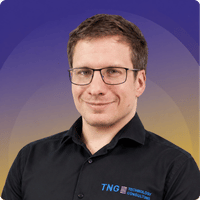 | Marc Schuh | Data Lakes – Lessons Learned from Building, Operating and Connecting them to AI | Marc Schuh | Principal Consultant | TNG Technology Consulting | Germany | Data Lake, Metadata Management, Data Governance, AI-Ready Data | Most enterprise data landscapes grow organically into chaos: there is no lineage, no ownership, and no data quality - and AI cannot drink from a swamp. In this talk, Marc Schuh explains how to build a central data lake that actually scales. Drawing on years of consulting experience, he covers the architecture, engineering practices - including data mesh, Terraform modules, and dbt tests - and, above all, the user interface (UI) that determines whether an organisation ends up with a governed data lake or a swamp. He then explains why a central data lake is the most cost-effective path to safe, enterprise-wide AI and how AI, in turn, improves the metadata quality on which everything depends. The session provides a concrete reference architecture, real engineering patterns, and the lessons Marc wishes he had known on day one. | Dr. Marc Schuh is a Principal Consultant at TNG Technology Consulting in Munich. He specialises in software and enterprise architecture, areas in which Conway’s Law frequently comes into play, revealing that many technical problems are, at their core, organisational challenges. His approach focuses on driving steady improvement through intrinsic motivation and pragmatic solutions.Marc served as one of the technical leads involved in building Europe’s largest commercial data lake and migrated a legacy Visual Basic application to C# using the strangler fig pattern. He also supports large enterprises in improving complex marketing data pipelines.Beyond his consulting work, he contributes to innovative prototypes, including automated performance analytics for Germany’s national canoeing team and experiments with brain–computer interfaces. In his spare time, he maintains open-source projects that promote digital independence from major cloud providers: github.com/MarcSchuh.Before joining TNG, Marc earned a PhD in physics and competed as a 400-metre wheelchair sprinter at three Paralympic Games, becoming a world champion and European record holder. | marc-schuh-data-lakes |
| 2026-11-25 10:10 - 10:55 (GMT+2) | 2026-11-25 | 10:10 | 10:55 | Big Data Conference | Talk | Data in Motion | Spark Performance Tuning and Troubleshooting - Scraping the Bottom of the Barrel for Tricky Cases |  | Marcin Szymaniuk | Spark Performance Tuning and Troubleshooting - Scraping the Bottom of the Barrel for Tricky Cases | Marcin Szymaniuk | CEO | Senior Data Engineer | International Conference Speaker | TantusData | Poland | Apache Spark, Performance Optimization, Troubleshooting, Data Engineering | This talk dives into Apache Spark’s quirks in real-world production workloads involving terabytes of data. Marcin Szymaniuk begins with a quick recap of last year’s lessons and then explores practical corner cases in which Spark still struggles today. Topics include user-defined function (UDF) bottlenecks, driver-heavy tasks, large directed acyclic graphs (DAGs), and challenges with non-standard data sources. Attendees can expect a no-fluff, hands-on walkthrough of edge cases Marcin has encountered in production, offering insights to help their Spark jobs run more smoothly. | Specialising in helping clients monetise big data since the early 2000s, Marcin Szymaniuk leads a team of seasoned data engineers with expertise in data engineering, machine learning (ML), machine learning operations (MLOps), and cloud technologies.Marcin is adept at solving both non-standard challenges and everyday problems that require fast, practical solutions. His experience spans a wide range of industries and project sizes, with a strong focus on artificial intelligence (AI), ML, and deployment strategies.He has presented at numerous industry events, including Infoshare, J On The Beach, Devoxx, Huawei Eco-Connect Poland 2023, Berlin Buzzwords, Codestar, GeeCON, and Java Day Istanbul. | marcin-szymaniuk-spark-performance |
| 2026-11-25 11:20 - 12:05 (GMT+2) | 2026-11-25 | 11:20 | 12:05 | AI Summit | Talk | Minds & Machines | How to Preserve Human Decision-Making in AI-Driven Creative Systems |  | Marco Gentile | How to Preserve Human Decision-Making in AI-Driven Creative Systems | Marco Gentile | Director | Magna Studios | Portugal | Human Decision-Making, Creative AI, Responsible AI, Accountability | In artificial intelligence (AI)-driven environments, creative and strategic decisions are increasingly shaped by predictive systems that anticipate and pre-structure outcomes. While these systems accelerate execution, they also risk eroding authorship, accountability, and trust. This talk introduces a practical framework for preserving human decision-making in environments where content, ideas, and strategies can be generated at scale. Drawing on real-world experience in filmmaking and global brand communication, Marco Gentile explores how organizations can integrate AI without delegating responsibility. Participants will leave with five concrete principles for using AI in creative and strategic processes, ensuring that automation enhances execution while preserving the human capacity to define meaning, make decisions, and remain accountable for outcomes. | Marco Gentile is an Italian-born film and advertising director who works globally and is known for his cinematic approach to commercial storytelling and large-scale brand communication.Marco gained early international recognition as a director, winning multiple awards, including a Silver Lion at the Cannes Lions. He is a Fulbright Scholar and holds a master’s degree in Film and Media Arts from Emerson College in Boston, as well as a degree in political science.Over the course of his career, Marco has directed campaigns for leading global brands, including BMW, Mercedes-Benz, Adidas, Vodafone, Toyota, Meta, Lexus, Coca-Cola, Wells Fargo, Nissan, Volvo, and Orange, developing a reputation for combining European cinematic language with high-level international production execution. He spent several years on the director roster at Ridley Scott Associates in Los Angeles, working on major international projects.Alongside his directing practice, Marco develops and delivers talks exploring how storytelling, trust, and imagination are evolving as artificial intelligence (AI) reshapes creative and communication processes. Drawing on advertising, cinema, philosophy, and cultural analysis, his work examines how meaning, authorship, and audience trust are constructed in an increasingly automated media environment. He introduces a strategic lens for organisations: the governance of imagination—how to automate execution without delegating authorship, preserve human symbolic decision-making in areas where meaning is defined, and maintain trust in the age of generative systems.Marco is currently developing a television series and his first feature film while continuing to direct international campaigns and speak on storytelling, culture, and the future of communication.His speaking work is designed for leadership forums, corporate audiences, cultural institutions, and global conferences focused on the future of storytelling, the cultural impact of AI, and the role of imagination as a strategic capability for organisations and brands operating in complex technological environments. | marco-gentile-how-to |
| 2026-11-25 10:10 - 10:55 (GMT+2) | 2026-11-25 | 10:10 | 10:55 | Big Data Conference | Talk | Data Value & Trust | Agentic Data Governance |  | Mario Meir-Huber | Agentic Data Governance | Mario Meir-Huber | Principal AI Architect | self | Austria | Data Governance, AI Agents, AI Governance | For two decades, data governance has produced boards and meetings but delivered limited improvements in data quality. In this session, Mario Meir-Huber shows how organisations can replace a traditional data governance department with a fleet of artificial intelligence (AI) agents governed according to each agent’s potential blast radius and audited by an independent challenger. He also explains how organisations can progress towards this model responsibly, starting with a single agent this quarter. | Mario Meir-Huber is a Data & AI architect with 20 years of experience, formerly VP Data & AI at Magenta Telekom (Deutsche Telekom) and Head of Data at Uniqa, now focused on enterprise AI architectures — LLM platforms, agentic systems, and sovereign AI deployments. He is co-author of Finance-Grade Data & AI Products and further books on Big Data, Cloud, and AI. He has keynoted at GITEX Dubai, London Tech Week, WeAreDevelopers, and DSC, and teaches Data & AI at WU and TU Vienna. | mario-meir-huber-agentic-data |
| 2026-11-26 14:45 - 15:30 (GMT+2) | 2026-11-26 | 14:45 | 15:30 | Big Data Conference | Talk | Data Meets AI | Shipping Agentic AI: Secure, Scalable Architectures for Real-World Complexity |  | Nensi Hakobjanyan | Shipping Agentic AI: Secure, Scalable Architectures for Real-World Complexity | Nensi Hakobjanyan | Solutions Architect | Amazon Web Services | Germany | AI Agents, Multi-Agent Systems, AI Security, Cloud Architecture, Serverless | Agentic AI is everywhere, but most implementations do not survive beyond prototypes. Building agents that handle real-world complexity requires strong architecture, not just orchestration. In this session, Nensi Hakobjanyan explains how to design and operate production-ready single- and multi-agent systems. She applies monolith-to-microservices principles and domain-driven design to help avoid common pitfalls such as context sprawl, tight coupling, and brittle workflows. The session explores practical architectural patterns for building secure, scalable, and resilient agentic workloads and demonstrates how to move from experimental demos to autonomous systems that run reliably in production. | Nensi Hakobjanyan is a Solutions Architect at Amazon Web Services with a background in artificial intelligence (AI) and data analytics. As a Solutions Architect, Nensi Hakobjanyan supports enterprise customers in their cloud journey, focusing on generative AI and agentic initiatives. She actively advocates for making AI more accessible to audiences with varying levels of technical expertise and for breaking stereotypes in the industry. | nensi-hakobjanyan-shipping-agentic |
| 2026-11-26 13:50 - 14:35 (GMT+2) | 2026-11-26 | 13:50 | 14:35 | Big Data Conference | Talk | Data in Motion | Your Cloud Strategy After The Hyperscaler Era |  | Niels Claeys | Your Cloud Strategy After The Hyperscaler Era | Niels Claeys | Lead Data Engineer | Partner | Data Minded | Belgium | Cloud Sovereignty, Cloud Strategy, Cloud Architecture, Open Source | EU sovereignty is often framed in terms of policy and regulation, yet many organizations are left with a more practical challenge: how do they turn it into something concrete? This talk begins by clarifying what cloud sovereignty actually means: who it applies to, why it matters, and how organizations can approach it strategically. Niels Claeys will outline a pragmatic path, starting from business risks and regulatory requirements, moving through technology stack evaluation and workload identification, and ultimately translating this into a target architecture. To make this tangible, he will explore a range of architectural patterns: from fully on-premises platforms to sovereign control planes in the public cloud, as well as portable workload designs that reduce vendor lock-in. He will also take a realistic look at EU-based cloud providers and what they currently offer as alternatives to hyperscalers. Finally, Niels Claeys will examine the role of open source as a key enabler of sovereignty, showing how it supports transparency, portability, and long-term flexibility. Attendees can expect concrete examples, real-world trade-offs, and actionable insights for teams navigating sovereignty in regulated environments. | Niels Claeys is a Lead Data Engineer at Data Minded with close to 10 years of experience in the data industry. He specializes in building scalable data platforms on AWS, Azure, and European cloud platforms and has deep expertise in distributed systems and system architecture. He embraces technical challenges and sees complexity as an opportunity to innovate rather than an obstacle. | niels-claeys-your-cloud |
| 2026-11-27 11:20 - 12:05 (GMT+2) | 2026-11-27 | 11:20 | 12:05 | Big Data Conference | Talk | Data Meets AI | Cascading Failures in Multi-Agent Systems: Tracing and Evaluating Multi-Agent Deployments |  | Oleksandra Bovkun | Cascading Failures in Multi-Agent Systems: Tracing and Evaluating Multi-Agent Deployments | Oleksandra Bovkun | Sr. Developer Advocate | Databricks | Netherlands | Multi-Agent Systems, AI Observability, Distributed Tracing, AI Evaluation, MLflow | Multi-agent systems shift the evaluation challenge from individual model outputs to the integrity of the coordination layer. When a supervisor agent delegates a task with flawed context, the error propagates and amplifies through the chain, leading to distributed hallucinations that bypass traditional end-to-end testing. Debugging these systems requires treating them as distributed networks rather than isolated large language model (LLM) calls. In this session, Oleksandra Bovkun covers tracing, evaluation, and governance for multi-agent systems and how to ensure that agentic workflows remain reliable, transparent, and secure at scale. This session provides a technical deep dive into solving observability challenges in complex agentic workflows. She explores how to move from black-box testing to a transparent architecture using MLflow tracing. | Oleksandra Bovkun is a Developer Advocate at Databricks with a background as a data engineer, AI engineer, and solutions architect. She has spent her career building real-world AI solutions and architecting data platforms - which means she has made many of the mistakes so others do not have to. She is passionate about making complex AI and data topics accessible and helping the community ship things that actually work in production. | oleksandra-bovkun-cascading-failures |
| 2026-11-26 13:50 - 14:35 (GMT+2) | 2026-11-26 | 13:50 | 14:35 | AI Summit | Talk | Minds & Machines | The Culture of Purpose: How to Communicate in an Age of Intelligence |  | Pascal Wiscour-Conter | The Culture of Purpose: How to Communicate in an Age of Intelligence | Pascal Wiscour-Conter | Community Engagement & Development Officer | Luxembourg School of Business | Luxembourg | Storytelling, Leadership, Organizational Culture | Pascal Wiscour-Conter explains that society has entered an era of exponential change, with multiple technologies disrupting how people live and work. The most notable and widely discussed of these, artificial intelligence (AI), affects how people communicate and, as Pascal argues, will inherently force us to become human... again. In a hyper-connected, noisy world, people can choose to use Creative AI intentionally, harnessing AI as a productivity and creativity tool, instead of passively engaging in Lazy AI. As technological developments accelerate, people can learn to overcome the cognitive gap and leverage their unique metaskills to reach new heights while communicating more effectively. Based on research in various fields, including neuroscience and epigenetics, it is possible to codify the process of crafting and applying meaningful storytelling, including within corporations. When vision, mission, value proposition, and culture are aligned, communication can maximise engagement, both externally with clients and internally with collaborators. A Story Guide helps craft this Corporate DNA and incorporate it into all corporate communications. AI agents can be trained and used in a writers’ room setup to facilitate and enhance the process. However, human creativity and curiosity cannot be replaced. AI can and should be used to enhance them meaningfully for the greater good. | Pascal Wiscour-Conter is an international entrepreneur from Luxembourg who has spent 20 years abroad. He started his career in finance and soon shifted his focus towards entrepreneurship through the launch and promotion of the Luxembourg maritime registry for megayachts, a role that took him to Monaco. To help manage these complex vessels, he later moved to California and developed a cloud-based tangible asset management platform.It was there that he discovered the world and mindset of startups. He also gained experience in Hollywood-style storytelling and Silicon Valley-style evangelism. In New York, he established a writers’ room and worked with professionals in the entertainment industry, notably on Broadway, while also engaging in real estate activities.After returning to Luxembourg and spending a brief period in public service, he re-entered the private sector and startup ecosystem, focusing on sharing knowledge and serving others. Today, he specialises in entrepreneurship and strategic communication. He is also a published author and an international keynote speaker.Pascal is the Community Engagement and Development Officer and a faculty member in strategic communication at the Luxembourg School of Business, where he teaches storytelling in an exponential environment. His classes inspired him to write his recently published book, The Culture of Purpose: How to Communicate in an Age of Intelligence, which he discusses at prestigious international conferences and institutions, including leading universities. | pascal-wiscour-conter-the-culture |
| 2026-11-25 14:45 - 15:30 (GMT+2) | 2026-11-25 | 14:45 | 15:30 | AI Summit | Talk | Proof of Value | Streamlining Communication: A Brain-First AI Approach |  | Paweł Feliński | Streamlining Communication: A Brain-First AI Approach | Paweł Feliński | Head of Delivery | Advisor to the Board | Primotly | Poland | Knowledge Management, Human-Centered AI, Workflow Automation | In a remote-first software house, meetings and asynchronous chats quickly become the backbone of communication. As every new tool suddenly becomes AI-powered, instead of following the usual AI everywhere trend, Paweł Feliński and his team took a brain-first approach: first understanding how knowledge actually moved through the organisation, and only then deciding where AI could genuinely help. That led to an unexpected discovery: many recurring agile “ceremonies” existed mainly to move information from one person to another. Once they started treating organisational knowledge as an operational problem, not just a documentation problem, several things changed quickly. Post-meeting note-taking disappeared. Developers stopped joining estimation sessions by default. Specifications became asynchronous, reviewable, and easier to evolve. Some meetings became shorter. Others vanished entirely. What disappeared were not feedback loops or collaboration, but the manual overhead around them. To support this, the team built a lightweight, LLM-agnostic internal knowledge layer designed around their actual delivery workflows rather than generic AI productivity demos. Not every experiment worked. In several cases, removing a ceremony also removed hidden coordination value they had not noticed before. This talk is a practical before/after case study of how a growing software company used a brain-first AI approach to reduce coordination overhead - and discovered that many agile “ceremonies” existed mainly to compensate for broken knowledge flow. | Paweł believes that strategy means nothing without execution. For him, business is about connecting purpose with delivery - turning ideas into outcomes through clarity, accountability, and pragmatic decision-making.Over the past several years, he has worked as a management consultant, advising organisations of different sizes — from start-ups and scaling companies to large international enterprises. Working across more than 15 countries on four continents, Paweł has helped leaders and teams improve the way they deliver products, manage change, and align execution with business goals.His experience spans industries including oil and gas, pharma, healthcare, finance, education, retail, telecom, and IT. Whether working with executives, delivery organisations, or product teams, he focuses on creating environments where transparency, ownership, and continuous improvement lead to sustainable results.Today, as Head of Delivery at Primotly, Paweł combines hands-on operational leadership with consulting experience to guide the company and help its clients discover better ways to make their products happen. | pawel-felinski-streamlining-communication |
| 2026-11-25 09:00 - 10:00 (GMT+2) | 2026-11-25 | 09:00 | 10:00 | AI Summit | Keynote | iMAX | Why Most AI Initiatives Fail - A Leadership Framework for Turning AI Into Real Business Results |  | Peter Mesarec | Why Most AI Initiatives Fail - A Leadership Framework for Turning AI Into Real Business Results | Peter Mesarec | CEO at SEOS AI | Author | SEOS AI | Slovenia | AI Adoption, AI Leadership, AI Strategy, Change Management, AI ROI | Most organizations already have access to AI tools, yet very few are achieving measurable business transformation. After working with more than 150 companies on AI adoption and operational implementation, Peter Mesarec has identified a recurring pattern: AI initiatives rarely fail because of technology limitations. They fail because leadership teams approach AI without a structured execution model. Companies often jump directly into tools, pilots, or automation before identifying where AI creates the highest operational value, how teams will actually adopt it, and how leadership should guide implementation across the organization. In this session, Peter presents a practical leadership framework for turning AI from isolated experimentation into measurable operational impact. The presentation is based on real implementation patterns observed across multiple industries and departments, including marketing, customer support, HR, finance, and operations. Attendees will learn:
The session focuses on practical implementation, measurable outcomes, and organizational execution rather than AI hype or futuristic predictions. | Peter Mesarec is the CEO of SEOS AI, an international speaker, and an AI strategist focused on helping organizations operationalize AI in real business environments. Over the past several years, he has worked with more than 150 companies across Europe on AI adoption, operational implementation, and AI-first transformation strategies. His work focuses on helping leadership teams identify high-impact AI opportunities, improve organizational efficiency, and implement AI in a structured, measurable, and sustainable way. Peter regularly works with enterprise leaders on AI governance, process optimization, adoption frameworks, and company-wide rollout strategies. His clients include international companies, government institutions, and enterprise teams navigating large-scale AI adoption. He has worked with organizations and leadership teams across more than 10 countries, including the U.S., Switzerland, the Netherlands, China, Malaysia, and Australia, delivering AI-focused executive sessions, workshops, and organizational training programs. Peter is also the author of the book “The AI Execution System,” focused on helping leaders turn AI from experimentation into measurable business results. | peter-mesarec-why-most |
| 2026-11-27 10:10 - 10:55 (GMT+2) | 2026-11-27 | 10:10 | 10:55 | AI Summit | Talk | Minds & Machines | AI Anxiety: Maintaining Autonomy and Purpose in the Era of Digital Gods |  | Povilas Godliauskas | AI Anxiety: Maintaining Autonomy and Purpose in the Era of Digital Gods | Povilas Godliauskas | Well-Being Psychologist | Therapist | Researcher | godliauskas.com | Lithuania | Mental Health, Psychology of AI, Digital Well-Being, Human Autonomy | We are entering a new era in which an increasing number of individuals rely on AI chatbots and agents for information, advice, and even emotional support. Furthermore, there is growing discourse around the leaders of AI companies aiming to win the race to create an omniscient, omnipotent, and omnipresent AI “god” that could influence governance and politics. This raises the question of what the role of AI professionals is in this new era, where old gods are being replaced by technological ones. The goal of this presentation is to discuss the most recent data on AI anxiety, AI ambivalence, and related psychological challenges associated with the adoption of AI systems. Povilas Godliauskas will also provide psychological tools and techniques to help attendees maintain purpose and mental health in the face of these new psychological and societal challenges. | Povilas Godliauskas is a psychologist, therapist, researcher, and organizational consultant. He has over 10 years of experience in people management, IT recruitment, and counselling and coaching for software professionals and managers. He is also the co-author of the first theory of software engineers’ well-being, published in Empirical Software Engineering in 2025, and is recognized as one of the rising leaders in this field. | povilas-godliauskas-ai-anxiety |
| 2026-11-25 12:15 - 13:00 (GMT+2) | 2026-11-25 | 12:15 | 13:00 | Big Data Conference | Talk | Data Value & Trust | Sentiment Analysis using Databricks AI Functions |  | Raghav Matta and Vivek Singh | Sentiment Analysis using Databricks AI Functions | Raghav Matta and Vivek Singh | Senior Solutions Architect | Senior Cloud Engineer | Databricks | dunnhumby | India | Sentiment Analysis, Databricks, SQL, Natural Language Processing | In this talk, Raghav Matta and Vivek Singh explore a real-world scenario involving real-time social media analysis using Databricks AI Functions in SQL for enrichment powered by large language models (LLMs). They begin by outlining the business problem, focusing on how organizations monitor sentiment, trends, and reactions on social media platforms. Next, they walk through the solution architecture, including Azure Event Hubs, Unity Catalog, and Azure Databricks, with a focus on Databricks AI Functions in SQL, such as aianalyzesentiment(), aiextract(), aiclassify(). They then ingest live or simulated social media content into Databricks, apply Databricks AI Functions to analyze sentiment and topics, store the results in Delta Lake, and create visualizations using Databricks AI/BI. Finally, they use a Databricks Genie Agent to ask questions about the analyzed data in natural language and derive further insights. | Raghav Matta is a Senior Specialist Solutions Architect at Databricks, where he helps organizations tackle complex big data challenges. With over ten years of experience across cloud data platforms, he has assisted numerous clients in deploying scalable analytics solutions. His expertise spans Azure, big data, and Apache Spark.As a Microsoft Certified Trainer for eight consecutive years, Raghav has delivered sessions at multiple conferences and meetups, sharing insights on the Azure Data Platform and artificial intelligence (AI) services.Vivek Singh is a Senior Cloud Engineer specializing in cloud architecture, platform engineering, and data solutions using Microsoft Azure and modern cloud-native technologies. He has extensive experience designing and delivering secure, scalable cloud platforms, infrastructure as code (IaC) using Terraform, Azure Kubernetes Service (AKS), GitOps, CI/CD automation, cloud governance, and AI-enabled developer platforms.A Microsoft Certified Trainer (MCT) since 2017, Vivek has delivered numerous technical workshops and conference sessions at national and international events, helping engineers and organizations adopt Azure, cloud-native architectures, DevOps, and modern data engineering practices. His work focuses on building enterprise-scale cloud platforms, enabling AI-driven developer productivity, and implementing real-time analytics and data solutions using Azure and Databricks.He is passionate about sharing practical knowledge with the community and enjoys speaking about cloud infrastructure, platform engineering, AI, and data technologies. | raghav-matta-and-vivek-singh-sentiment-analysis |
| 2026-11-26 13:50 - 14:35 (GMT+2) | 2026-11-26 | 13:50 | 14:35 | AI Summit | Talk | Agent Foundry | Observability Is How You Manage Agents |  | Sam Komesarook | Observability Is How You Manage Agents | Sam Komesarook | Founder | Arts & Engineering Composite | UK | AI Observability, AI Agents, Distributed Tracing, AI Reliability | AI agents are no longer just prompts with tool calls. They are long-running, asynchronous systems that act across tools, queues, context, sandboxes, and teams. In this talk, Sam Komesarook shows why debugging agents is becoming less like reading logs and more like managing autonomous workers: tracing what happened, interpreting recurring behavior, catching failures live, and closing the loop from insight to intervention. | Sam Komesarook is the founder of the Arts & Engineering Composite, the creator of the Yield Agritech platform, and a former team member at Palantir and Fern Labs. | sam-komesarook-observability-is |
| 2026-11-27 14:45 - 15:45 (GMT+2) | 2026-11-27 | 14:45 | 15:45 | AI Summit | Keynote | iMAX | Every company becomes an AI company. Or a former one. |  | Šarūnas Chomentauskas | Every company becomes an AI company. Or a former one. | Šarūnas Chomentauskas | CEO | Co-Host | Exacaster | Lithuania | AI-Native Organization, AI Operating Model, Organizational Design, AI Transformation | In ten years, will a company still exist - or only the version of it that survived AI? AI does not add to what a business does. It rewrites how that business creates value. One person with AI can now do the work of ten, and the bottleneck is no longer skill - it is the organisation. The companies that move first take the market. The ones that wait become the market. Drawing on his own live company rebuild, Šarūnas Chomentauskas walks attendees through six principles that define an AI-native operating model, including integrated delivery that lets one person own end-to-end work; specialist functions as horizontal slices, not silos; and AI as the new professional service. Each principle is grounded in what worked, what broke, and what it cost. Attendees leave with a blueprint for the next decade - and a clearer view of which side of the line their company is on. | Šarūnas Chomentauskas is a CEO who has rebuilt his company around artificial intelligence (AI).More than 15 years in software More than 15 years in AI and machine learning (ML) 15 years as CEO and co-founder of ExacasterŠarūnas has built AI products for more than 15 years — putting them to work while most of the market still called AI a buzzword. Today, those products run inside European companies, making decisions for millions of customers every day.He is a builder. And he has done what most CEOs are still only planning: he rebuilt his own company around AI. From leadership to daily work, every employee now delivers many times the impact they did before. He has experienced the breakthroughs and the hard lessons firsthand.Now, Šarūnas helps other leaders do the same: drive real AI adoption across their organizations, using the six principles he has proved through his own experience. AI adoption starts with people, from the top down, and rarely with tools alone. | sarunas-chomentauskas-every-company |
| 2026-11-27 10:10 - 10:55 (GMT+2) | 2026-11-27 | 10:10 | 10:55 | Big Data Conference | Talk | Data Value & Trust | Europe's Data Regulation Stack Is Complete: What Every Data Team Needs to Know |  | Silvan Jongerius | Europe's Data Regulation Stack Is Complete: What Every Data Team Needs to Know | Silvan Jongerius | Managing Partner | Founder | TechGDPR | Germany | EU AI Act, GDPR, Data Governance, AI Governance | The General Data Protection Regulation (GDPR) reshaped how organizations approach personal data and remains a core obligation for data teams. The EU AI Act adds another regulatory layer covering the development, deployment, and use of artificial intelligence systems. The AI Act entered into force in 2024 and applies in stages. Prohibited AI practices and AI-literacy obligations began applying in February 2025. Governance rules and obligations for general-purpose AI models followed in August 2025, while transparency requirements took effect in August 2026. Following the AI Omnibus amendments, requirements for high-risk use cases listed in Annex III apply from 2 December 2027, while requirements for high-risk systems embedded in regulated products under Annex I apply from 2 August 2028. Together, GDPR and the AI Act create overlapping obligations across data collection, processing, model development, deployment, and automated decision-making. Data teams should treat them as connected architectural and governance requirements rather than isolated compliance projects | Silvan Jongerius is the Founder and Managing Partner of TechGDPR, a consultancy specializing in data protection and AI compliance for technology companies. With over 100 client engagements across AI, blockchain, and deep tech, he helps companies turn European regulation into a competitive advantage rather than a legal burden.Silvan holds the IAPP Fellow (FIP), AIGP, CIPP/E, and CIPT certifications, and served as President of BerChain e.V. (2019–2025) and IAPP Berlin KnowledgeNet Co-Chair (2024–2025). His work sits at the intersection of engineering and regulation — translating the General Data Protection Regulation (GDPR) and AI Act requirements into practical architecture decisions for data and machine learning (ML) teams. | silvan-jongerius-europes-data |
| 2026-11-26 11:20 - 12:05 (GMT+2) | 2026-11-26 | 11:20 | 12:05 | Big Data Conference | Talk | Data in Motion | Surviving the Dual-Write Problem in Distributed Systems |  | Sohan Maheshwar | Surviving the Dual-Write Problem in Distributed Systems | Sohan Maheshwar | Lead Developer Advocate | AuthZed | Netherlands | Distributed Systems, Data Consistency, Transactional Outbox, Event Sourcing, CQRS | The dual-write problem appears whenever a system must write to two services, such as a database and an authorization engine, and cannot guarantee atomicity across them. A crash at the wrong moment can leave the system inconsistent, even if each component works perfectly. In this talk, Sohan Maheshwar explains why dual writes are fundamentally unsafe within a single process and what architects can do about it. He explores practical patterns used in real-world distributed systems:
Attendees will learn how to identify dual writes in their own architectures and choose the right mitigation strategy based on scale, consistency needs, and team maturity. This session gives engineers clear, actionable tools for building reliable and resilient distributed systems. | Sohan is a Lead Developer Advocate at AuthZed, based in the Netherlands. He started his career as a developer building mobile apps, and has been living in the cloud since 2013, in companies such as Amazon, Fermyon and Gupshup. He is also an O'Reilly author, having created a course on Cloud Concepts for Everyone.He has always been interested in emerging technologies and how they shape the world. | sohan-maheshwar-surviving-the |
| 2026-11-26 09:00 - 10:00 (GMT+2) | 2026-11-26 | 09:00 | 10:00 | AI Summit | Keynote | iMAX | Give Life to Your Organization and Superpower Your Team |  | Stefan Chiriacescu | Give Life to Your Organization and Superpower Your Team | Stefan Chiriacescu | Co-founder | CEO | Shopify Specialist | eCommerce Today Agency | Romania | AI Adoption, AI Assistants, Organizational Design, Future of Work | Most organizations have given their people artificial intelligence (AI) tools and called it a strategy. The licenses are paid for. The output is generic. The transformation never came. The missing piece is not a better tool. It is organizational voice - the ability to encode who an organization is, how it thinks, and what it stands for directly into every AI assistant its team uses daily. Stefan Chiriacescu built that system from scratch. The result: an 11× revenue increase, a team that moved from execution to strategy, and a 30-person organization operating with the output of an organization three times its size. In this session, Stefan Chiriacescu will show attendees the live architecture behind that outcome - how to give AI systems a real organizational identity, how to map intelligence across every department, and how to turn every employee into the most capable version of themselves. Not a concept. Not a demo. A working system attendees can replicate by Monday. | Stefan Chiriacescu is a serial entrepreneur, AI architect, and the founder and CEO of eCommerce Today — a global fractional eCommerce department serving more than 300 Shopify and Shopify Plus brands across North America, Europe, and the Middle East.He has owned and exited businesses on both sides of the Atlantic and has spent the last three years leading one of the more well-documented AI transformations in the agency space — growing revenue 11×, expanding from two services to seven, and building ETAOS, a proprietary AI-augmented operating system now running live across his organization.Stefan advises companies on AI adoption and organizational design, and speaks internationally on what it actually takes to move from experimentation to structural transformation. He is scheduled to present at AI Summit Europe 2026 in Vilnius and has presented at Digital Marketing Europe in Lisbon.His position has remained consistent: the goal is not to replace people. The goal is to make every person in an organization unreasonably capable. | stefan-chiriacescu-give-life |
| 2026-11-25 12:15 - 13:00 (GMT+2) | 2026-11-25 | 12:15 | 13:00 | AI Summit | Talk | Proof of Value | Making AI Tokens the New Telco Currency: Learnings for Global Operators |  | Stephen Douglas | Making AI Tokens the New Telco Currency: Learnings for Global Operators | Stephen Douglas | Head of Strategic Thought Leadership | Keysight Technologies | UK | AI Monetization, Token Economics, Telecom | Telecommunications operators in the Asia-Pacific (APAC) region are beginning to treat artificial intelligence (AI) tokens as billable allowances, much like gigabytes of mobile data or minutes of voice. This session will explore what this emerging “AI token economy” means for telecommunications operators, why the APAC model matters, and how Western operators can adapt the concept for enterprise, sovereign, and regulated AI services. The APAC market shows how operators can move beyond simply carrying AI traffic and begin packaging, rating, bundling, and billing for access to intelligence. By offering AI usage allowances to consumers, households, developers, small and medium-sized enterprises (SMEs), and larger enterprises, operators are positioning tokens as a recurring unit of consumption. However, this model does not transfer directly to Western markets, where consumers already access AI through global applications, hyperscalers, and device-native assistants. For many operators, the stronger opportunity is likely to be in business-to-business (B2B) services, including private inference, AI factories, graphics processing unit as a service (GPUaaS), sovereign AI platforms, edge AI, and AI model marketplaces. The presentation will also focus on a critical technical and commercial issue: token visibility. Operators cannot reliably count AI tokens from encrypted network traffic alone; authoritative usage records must come from the AI gateway, model platform, marketplace, or provider settlement layer. This creates a strategic choice: remain a connectivity provider or move into the AI service control plane. Stephen Douglas will also examine why AI-native key performance indicators (KPIs) are becoming essential. Traditional measures such as latency, throughput, and availability remain important, but the AI experience depends on new metrics, including time to first token, inter-token latency, tokens per second, task completion time, cost per token, tokens per watt, and tool-call latency. These metrics will shape assurance, service-level agreement (SLA) management, and monetisation models. Attendees will leave with practical insights into three telecommunications AI monetisation models: connectivity-only services, AI assurance, and AI service brokerage. The core message is clear: APAC is making tokens the new gigabyte; Western operators could follow suit or position tokens as the new cloud consumption unit. | Advisory Member for UK Security & Technology Expert Working Group - providing independent advisory to UK Government bodies.Stephen Douglas leads Keysight’s strategic thought leadership organization, shaping both the company’s perspective and the broader industry direction for emerging technologies and market forces driving future innovation. He drives thought leadership across key technology megatrends and growth areas, including 6G, AI, and Defense technologies.A frequent keynote speaker at leading global industry events, Stephen is a regular contributor to technology and business media, and a prominent advocate for innovation across the Information and Communication Technology (ICT) sectors. He also serves as an independent advisor to several industry and government bodies.With close to 30 years of experience in telecommunications, Stephen has been at the forefront of next-generation technologies from 2G to 6G. Throughout his career, he has worked with service providers, network equipment manufacturers, government bodies, and start-ups across the industry—helping them innovate, transform, and shape the future of a connected world. | stephen-douglas-making-ai |
| 2026-11-26 11:20 - 12:05 (GMT+2) | 2026-11-26 | 11:20 | 12:05 | AI Summit | Talk | Proof of Value | How a Mid-Market Consultancy Shipped 500+ Code Stories with Zero Developers |  | Thibault Fritsch | How a Mid-Market Consultancy Shipped 500+ Code Stories with Zero Developers | Thibault Fritsch | Founder & CEO | Robinswood | France | AI-Assisted Engineering, AI Agents, Code Generation, AI ROI | Most organizations measure artificial intelligence (AI) success by the number of processes automated. Robinswood, a French mid-market consultancy, took a radically different approach: it built Night Agent, an autonomous AI system that writes, tests, and deploys production code without human developers. In this session, Thibault Fritsch shares concrete metrics from 18 months of operating Night Agent in production, including 513 code stories delivered, deployment frequency, defect rates, and total cost of ownership compared with that of traditional development teams. Attendees will learn how to design AI agent architectures that scale from prototype to production, apply a measurement framework to assess AI-generated code quality and business impact, address real failure modes and implement recovery patterns when running autonomous agents at scale, and determine when AI agents outperform human developers - and when they do not. | Thibault Fritsch is the founder and Chief Executive Officer (CEO) of Robinswood, a French company. Since 2024, he has designed and deployed autonomous artificial intelligence (AI) agents in production for mid-sized enterprises, including Night Agent, a system capable of writing, testing, and delivering code from end to end. He regularly speaks about the industrialisation of generative AI and the measurement of its business impact. | thibault-fritsch-how-a |
| 2026-11-26 15:50 - 16:50 (GMT+2) | 2026-11-26 | 15:50 | 16:50 | AI Summit | Keynote | iMAX | Skill issue: Teaching robots to play Counter-Strike with imitation learning |  | Thomas Endres | Skill issue: Teaching robots to play Counter-Strike with imitation learning | Thomas Endres | Managing Partner | TNG Technology Consulting GmbH | Germany | Robotics, Robot Foundation Models, Imitation Learning, NVIDIA GR00T, Gaming | Have you ever wished you had an equal who could play Counter-Strike just as well as you? Thanks to recent developments in Robot Foundation Models (RFMs), robots can learn how to play video games just like you, imitating your best and worst behaviours. In this talk, Thomas Endres shows how to use imitation learning to teach an RFM to play arbitrary games. He draws first blood with an introduction to Robot Foundation Models. Attendees will learn how they work, what kind of data they are designed to process, and how that makes NVIDIA’s GR00T perfect for playing video games. After that, Thomas quick-scopes the concept of imitation learning, what kind of data they need to train their GR00T model, and how they can collect it from games. Finally, he tells the story of leveling up the model from total noob to global elite - one failure at a time - and share all the things they learned along the way. Throughout the talk, Thomas includes live demos in their slides. To close the game, they challenge one member of the audience to beat GR00T live on stage in a 1v1. | Thomas Endres is a Managing Partner at TNG Technology Consulting in Munich. Besides his normal work for the company and the management of client projects, he creates various prototypes, including real-time deepfakes, AI for generating presentations, and various robotics showcases. He works on applications in the field of AI, robotics, AR/VR, and teleoperation. Furthermore, he is involved in open-source projects. Thomas studied Computer Science at TU Munich and is a passionate software developer. As an Intel Software Innovator and Black Belt, he presents new technologies such as AI, AR/VR, and robotics worldwide. For this, he has received awards, including a JavaOne Rockstar Award and several Best Speaker Awards. | thomas-endres-skill-issue |
| 2026-11-25 13:50 - 14:35 (GMT+2) | 2026-11-25 | 13:50 | 14:35 | Big Data Conference | Talk | Data in Motion | Building Deterministic Data Context for AI Agents: A Step-by-Step Guide |  | Tom Kaltofen | Building Deterministic Data Context for AI Agents: A Step-by-Step Guide | Tom Kaltofen | AI Engineer | Founder | mloda | Germany | Context Engineering, AI Agents, Data Contracts, Data Quality, Data Pipelines | When AI agents fail on enterprise data, teams tend to blame the model. In practice, the root cause is usually upstream: a schema changed silently, a transformation behaved differently between development and production, or a data source was swapped without updating downstream assumptions. The data layer is the unreliable component, not the large language model (LLM). In this session, Tom Kaltofen examines why coding agents, such as Cursor and Claude Code, handle context reliably while enterprise data agents struggle. Coding agents operate on deterministic context: files have fixed paths, functions have type signatures, and tests provide ground truth. Enterprise data has none of that by default. From there, he introduces the handover layer pattern: data producers publish transformations with explicit input/output contracts, consumers declare what they need, and a runtime resolves how to compute it. The architecture follows the same principles as Kubernetes: declarative specs, independent controllers, and runtime reconciliation. A live demonstration shows an AI agent discovering transformations through a plugin registry, applying PII redaction, and switching between data sources without hard-coded paths. The demo runs on mloda, an open-source Python framework. The session covers what worked, what did not, and where the pattern breaks down. Attendees leave with a concrete architectural pattern for separating “what” to compute from “how” to compute it, and a clearer picture of why existing tooling, such as feature stores, semantic layers, and data catalogs, was not designed for AI agent consumers. | Tom Kaltofen is a Berlin-based data and AI engineer and the creator of mloda, an open-source Python framework for declarative, plugin-based data access in AI workflows. With a background in building data infrastructure at the intersection of data engineering and data science, including feature stores, machine learning (ML) pipelines, and retrieval-augmented generation (RAG) systems, Tom focuses on the handover layer between data producers and AI consumers. | tom-kaltofen-building-deterministic |
| 2026-11-25 11:20 - 12:05 (GMT+2) | 2026-11-25 | 11:20 | 12:05 | AI Summit | Talk | Proof of Value | From Pilot to Production: Running Enterprise AI Across 12 Markets |  | Vedran Bajer | From Pilot to Production: Running Enterprise AI Across 12 Markets | Vedran Bajer | General Manager for Baltics, Hungary and Adriatics | Wonderful | Croatia | Production AI, Enterprise AI, Multilingual AI, AI Agents | Most enterprises remain early in the scaling journey. McKinsey’s 2025 survey found that 88% of respondents’ organizations regularly used artificial intelligence in at least one business function, while only 39% reported any enterprise-level EBIT impact from AI. The gap is rarely caused by the models alone; it also reflects data access, legacy integration, language coverage, and organizational readiness. Vedran Bajer leads Wonderful’s deployments across 12 markets in one of Europe’s most linguistically diverse and regulatorily complex regions, including deployments for companies in Lithuania, Latvia, and Estonia. In this session, he explains what production looks like at scale: how deployments move from contract signing to production in weeks, why mature systems achieve automation rates above 80% and approximately 64% end-to-end resolution, compared with an industry average of around 3%, and what breaks first when a single-market pilot becomes a multi-market operation. Attendees will leave with a concrete deployment checklist drawn from real-world enterprise implementations - a practitioner’s view from the ground. | Vedran Bajer is General Manager for the Adriatic, Hungary, and Baltic markets at Wonderful, the enterprise AI platform. He leads 12 markets across one of Europe's most linguistically and regulatorily complex corridors. Before Wonderful, Vedran held senior roles at Microsoft Croatia and Google, where he spent over 10 years. He is an active advisor to regional tech companies Treblle and Chippolo, and is currently completing a PhD in Information Sciences and AI. He is based in Zagreb. | vedran-bajer-from-pilot |
| 2026-11-25 11:20 - 12:05 (GMT+2) | 2026-11-25 | 11:20 | 12:05 | Big Data Conference | Talk | Data in Motion | From Tables to Streams: Apache Flink for SQL Developers |  | Viktor Gamov | From Tables to Streams: Apache Flink for SQL Developers | Viktor Gamov | Principal Developer Advocate | Confluent | USA | Stream Processing, Apache Flink, Flink SQL, SQL | What if SQL queries could process data as it is generated instead of after it is stored? Apache Flink speaks SQL fluently, but it is not a database - it is best understood as a conductor orchestrating endless streams of data rather than a librarian managing stored records. This session bridges the gap between traditional SQL and stream processing. In this session, Viktor Gamov will explore:
Attendees will leave understanding not just how to use Flink SQL, but also when and why it transforms traditional database skills into real-time data superpowers. This session is ideal for SQL developers and data engineers ready to make their queries travel through time. | Viktor Gamov is a Developer Advocate at Confluent, a company that makes a cloud streaming platform based on Apache Kafka. Viktor has extensive expertise in building enterprise application architectures using open-source technologies. He enjoys helping architects and developers design and develop low-latency, scalable, and highly available distributed systems. He is a professional conference speaker on distributed systems, streaming data, the JVM, DevOps, and other topics, and regularly speaks at events including JavaOne, Devoxx, OSCON, QCon, and others. He co-authored O’Reilly’s «Enterprise Web Development.» He blogs at http://gamov.io and co-hosts DevRelRad.io. Follow Viktor on Twitter at @gamussa, where he posts about gym life, food, open source, and, of course, Kafka and Confluent! | viktor-gamov-from-tables |
| 2026-11-25 10:10 - 10:55 (GMT+2) | 2026-11-25 | 10:10 | 10:55 | AI Summit | Talk | Agent Foundry | Stop Paying for Unused Tokens: AI Cost Optimization with Vertex AI |  | Vivek Singh | Stop Paying for Unused Tokens: AI Cost Optimization with Vertex AI | Vivek Singh | Senior Cloud Engineer | dunnhumby | India | AI Cost Optimization, Vertex AI, Context Caching, LLMs, Prompt Engineering | As enterprises rapidly adopt large language models (LLMs), managing inference costs has become a critical challenge. Many AI applications repeatedly transmit large amounts of static or redundant context, resulting in unnecessary token consumption, increased latency, and higher operational expenses. While organizations invest heavily in AI capabilities, few optimize how prompts are constructed and delivered to the model. In this session, Vivek Singh demonstrates practical techniques for reducing LLM token usage by up to 50% through intelligent prompt preprocessing, semantic context selection, and context caching in Google Vertex AI. Attendees will learn how to eliminate redundant information, preprocess structured and unstructured data, retrieve only the most relevant context, and leverage Vertex AI’s context caching capabilities to avoid repeatedly sending identical information. Through a live demonstration, the audience will compare a traditional “send everything” approach with an optimized pipeline, examining token consumption, response latency, and API costs in real time. The session also covers implementation patterns, architectural best practices, and measurable strategies that can be integrated into enterprise AI applications without sacrificing response quality. Attendees will leave with the practical knowledge needed to build faster, more scalable, and significantly more cost-efficient generative AI solutions, making this session valuable for AI engineers, data engineers, cloud architects, platform engineers, and developers deploying LLM-powered applications in production. | Vivek Singh is a Senior Cloud Engineer specializing in cloud architecture, platform engineering, and data solutions using Microsoft Azure and modern cloud-native technologies. He has extensive experience designing and delivering secure, scalable cloud platforms, infrastructure as code (IaC) using Terraform, Azure Kubernetes Service (AKS), GitOps, CI/CD automation, cloud governance, and AI-enabled developer platforms.A Microsoft Certified Trainer (MCT) since 2017, Vivek has delivered numerous technical workshops and conference sessions at national and international events, helping engineers and organizations adopt Azure, cloud-native architectures, DevOps, and modern data engineering practices. His work focuses on building enterprise-scale cloud platforms, enabling AI-driven developer productivity, and implementing real-time analytics and data solutions using Azure and Databricks.He is passionate about sharing practical knowledge with the community and enjoys speaking about cloud infrastructure, platform engineering, AI, and data technologies. | vivek-singh-stop-paying |
| 2026-11-25 14:45 - 15:30 (GMT+2) | 2026-11-25 | 14:45 | 15:30 | Big Data Conference | Talk | Data Meets AI | From Prototype to Production: Building Reliable Conversational Agents with LangGraph |  | Will White | From Prototype to Production: Building Reliable Conversational Agents with LangGraph | Will White | Senior AI Engineer | Thrive Learning | UK | Conversational AI, LangGraph, Agent Orchestration, Production AI, AI Observability | Conversational agents are easy to prototype and much harder to operate reliably in production. In this talk, Will White shares lessons from deploying LangGraph-based conversational agents at Thrive Learning, where a multi-tenant agent setup handles thousands of conversations every day. The production system includes streaming responses, specialised agents for coaching, analytics, and chat, a retrieval-augmented generation (RAG) database, and an evaluation and monitoring layer using Arize AX. Drawing from this experience, Will shows how LangGraph can help teams move beyond fragile agent demos towards systems with clearer control flow, better observability, safer tool use, and more maintainable architecture. The talk covers practical production patterns including state management, graph-based orchestration, monitoring and evaluations, human-in-the-loop workflows, agentic RAG, idempotent identifiers, prompt caching, summarisation, and context management. It also covers the trade-offs: where LangGraph adds real value, where it increases complexity, and how to decide whether the learning curve is worth it. Attendees will leave with a practical checklist for designing, testing, monitoring, and evolving conversational agents in production. | Will White is a Senior AI Engineer at Thrive Learning, specialising in production agentic AI systems. Over the past seven years, he has worked across data science, machine learning, and AI engineering, with experience in fintech at CarFinance247, at Meta, and in public service as a former police officer. He has developed and shipped production conversational agents at both Thrive Learning and CarFinance247, with a recent focus on LangGraph, agent evaluation, retrieval-augmented generation (RAG), and reliable AI system design. Will also shares practical insights on agentic AI through his YouTube channel. | will-white-from-prototype |
| 2026-11-26 12:15 - 13:00 (GMT+2) | 2026-11-26 | 12:15 | 13:00 | Big Data Conference | Talk | Data Meets AI | From AutoML to AgenticML: A True Paradigm Shift in ML Platforms |  | Yulia Stolin | From AutoML to AgenticML: A True Paradigm Shift in ML Platforms | Yulia Stolin | AI (ML) Platform Manager | Teads | Israel | Machine Learning Platform, AI Agents, AutoML, AI Engineering, MLOps | AI agents are not only changing how teams write code. They are changing how machine learning research is structured, executed, and scaled. In this session, Yulia Stolin will share a production-oriented journey from automated machine learning (AutoML) to AgenticML: a shift from predefined automation toward AI-driven research loops where data scientists, ML platforms, and AI agents work together. Yulia leads the ML Platform team at Teads. The platform serves the research needs of the company’s data science groups and supports large-scale production ML systems, including inference infrastructure processing more than one billion predictions per second. In this environment, every promising idea must eventually satisfy requirements related to scale, latency, reliability, infrastructure cost, reproducibility, and business impact. Historically, AutoML helped machine learning teams automate known research paths such as feature selection, hyperparameter tuning, architecture search, model training, and repeatable experimentation. AutoML made research faster, more structured, and more scalable. But AutoML works mainly inside boundaries that already exist. It can search, tune, and optimize inside a space that humans have already defined. The next step was adopting the Model Context Protocol (MCP): giving agents access to context, connecting them to platform APIs, and allowing them to automate parts of the research workflow. This made agents much more useful because they could interact more directly with the real system by reading metadata, triggering actions, accessing tools, and executing experiments. But this was still a closed system. Agents could automate only what the platform already exposed, but the research was still limited by predefined tools, predefined flows, and predefined assumptions. AgenticML represents the real paradigm shift: from a closed, predefined automation system to an open research system that can reason about the next step, decide what is missing, implement what is required, run experiments, inspect metrics, compare results, and continue working across long-running research sessions. The session will focus on practical implementation. It will show how the platform evolved from predefined automation to an AI-first research approach and what this shift requires in terms of tools, workflows, platform capabilities, and engineering mindset. The talk will include real-world use cases, implementation examples, and successful projects, while also covering the challenges that arise when agentic AI moves from demos into production-grade research platforms: experiment execution, long-running agent sessions, cost control, GPU usage, reproducibility, platform safety, decision tracking, and agent-friendly reporting. Attendees will leave with a clear understanding of the AgenticML paradigm shift, why it matters for ML platforms, and how backend engineers, ML engineers, data scientists, and platform teams can approach building the next generation of AI-driven research systems. | Yulia Stolin leads the ML Platform at Teads, building production-grade infrastructure for data science research, experimentation, and large-scale inference.She has more than 20 years of experience across software architecture, backend systems, big data, machine learning, and data platforms. Her work sits at the crossroads of backend engineering, DevOps, data engineering, data science, and ML, where architecture must meet real-world constraints around scale, latency, reliability, cost, and business impact.Outside work, Yulia enjoys traveling, playing tennis, and observing how culture, technology, and people interact, miscommunicate, adapt, and occasionally create something surprisingly useful together. | yulia-stolin-from-automl |
| 2026-11-25 17:00 - 18:00 (GMT+2) | 2026-11-25 | 17:00 | 18:00 | Movie | Hunger Games: Sunrise on the Reaping |  | A Special Screening | Hunger Games: Sunrise on the Reaping | A Special Screening | Action, Dystopian, High-Stakes Choices, Drama, Competition, | Join us for an unforgettable cinematic experience with The Hunger Games: Sunrise on the Reaping - a tense return to Panem filled with survival, rebellion, and high-stakes choices. Settle in and enjoy the story together with fellow conference attendees. | a-special-screening-hunger-games | ||||||
| 2026-11-26 15:30 - 15:50 (GMT+2) | 2026-11-26 | 15:30 | 15:50 | Coffee Break | Snacks, Beverages & Networking |  | Afternoon Break | Snacks, Beverages & Networking | Afternoon Break | Coffee, Refreshments, Networking, Recharge, Relaxation, | An afternoon break is just what you need to beat that post-lunch slump. It's the perfect chance to grab a coffee, take a breather, or chat with someone before diving back into sessions. | afternoon-break-snacks-beverages | ||||||
| 2026-11-25 15:30 - 15:50 (GMT+2) | 2026-11-25 | 15:30 | 15:50 | Coffee Break | Snacks, Beverages & Networking |  | Afternoon Break | Snacks, Beverages & Networking | Afternoon Break | Coffee, Refreshments, Networking, Recharge, Relaxation, | An afternoon break is just what you need to beat that post-lunch slump. It's the perfect chance to grab a coffee, take a breather, or chat with someone before diving back into sessions. | afternoon-break-snacks-beverages-2 | ||||||
| 2026-11-26 17:00 - 18:00 (GMT+2) | 2026-11-26 | 17:00 | 18:00 | Afterparty |  | Conference Afterparty | | Conference Afterparty | Conference Afterparty, Networking, Socializing, Drinks, Entertainment, Community Building, | Experience a thrilling evening of networking, gaming, and entertainment at the conference’s lively after-party! Taking place at Forum Cinemas Vingis venue, the celebration kicks off right after the sessions conclude. Connect with fellow attendees, enjoy exciting games and activities, and savor complimentary drinks. Don’t miss this unforgettable evening - mark your calendars now! | conference-afterparty | |||||||
| 2026-11-25 13:00 - 13:50 (GMT+2) | 2026-11-25 | 13:00 | 13:50 | Lunch Break | Lunch, Networking & Refreshment |  | Lunch Break | Lunch, Networking & Refreshment | Lunch Break | Lunch Break, Catering, Refreshments, Networking, Socializing, | A conference lunch break is the perfect mix of food and conversation. You share ideas, swap business cards, and make new connections. By the end, you're recharged and ready for the next session, fueled in both mind and body. | lunch-break-lunch-networking | ||||||
| 2026-11-26 13:00 - 13:50 (GMT+2) | 2026-11-26 | 13:00 | 13:50 | Lunch Break | Lunch, Networking & Refreshment |  | Lunch Break | Lunch, Networking & Refreshment | Lunch Break | Lunch Break, Catering, Refreshments, Networking, Socializing, | A conference lunch break is the perfect mix of food and conversation. You share ideas, swap business cards, and make new connections. By the end, you're recharged and ready for the next session, fueled in both mind and body. | lunch-break-lunch-networking-2 | ||||||
| 2026-11-27 13:00 - 13:50 (GMT+2) | 2026-11-27 | 13:00 | 13:50 | Lunch Break | Lunch, Networking & Refreshment |  | Lunch Break | Lunch, Networking & Refreshment | Lunch Break | Lunch Break, Catering, Refreshments, Networking, Socializing, | A conference lunch break is the perfect mix of food and conversation. You share ideas, swap business cards, and make new connections. By the end, you're recharged and ready for the next session, fueled in both mind and body. | lunch-break-lunch-networking-3 | ||||||
| 2026-11-26 14:45 - 15:30 (GMT+2) | 2026-11-26 | 14:45 | 15:30 | AI Summit | Talk | Minds & Machines | From Industrial to Digital Mindset: Why Most AI Transformations Fail Before They Start |  | Jamie Bykov-Brett | From Industrial to Digital Mindset: Why Most AI Transformations Fail Before They Start | Jamie Bykov-Brett | Founder | AI & Automation Consultant & Educator | Bykov-Brett Enterprises | UK | AI Transformation, Change Management, AI Adoption, Organizational Culture | Most organisations invest heavily in AI tools and almost nothing in the human systems those tools depend on. In this session, Jamie Bykov-Brett, AI Transformation Strategist and founder of Bykov-Brett Enterprises, makes the case that the biggest barrier to AI adoption is not technical, but cultural. Drawing on hands-on consulting work across regulated industries and C-suite training programmes, Jamie presents a repeatable framework for diagnosing and closing the mindset gap that silently kills AI initiatives. Attendees will leave with a practical diagnostic tool, a model for phased cultural change, and concrete before-and-after examples from real enterprise deployments. This session is built for leaders who are tired of transformation roadmaps that look great on slides but stall in practice. | Jamie Bykov-Brett is an AI Transformation Strategist, TEDx speaker, and founder of Bykov-Brett Enterprises, helping organisations move from AI curiosity to real-world implementation. He has delivered AI programmes for global enterprises, trained C-suite leaders across sectors, and built practical frameworks that produce measurable outcomes rather than just inspiration. Jamie specialises in human-centric AI adoption, workforce transformation, and making complex technology genuinely accessible to the people who need to use it in practice. | jamie-bykov-brett-from-industrial |
| 2026-11-25 13:50 - 14:35 (GMT+2) | 2026-11-25 | 13:50 | 14:35 | AI Summit | Talk | Minds & Machines | The Art of Inventing: How Curiosity Creates Better Systems, Products, and Ideas |  | Mantas Damijonaitis | The Art of Inventing: How Curiosity Creates Better Systems, Products, and Ideas | Mantas Damijonaitis | Founder | Managing Director | NOTAS IT | Lithuania | Innovation, Curiosity, Creativity, Problem Solving | Many people associate invention with groundbreaking discoveries, patents, or revolutionary products. In reality, invention happens every day. A new workflow that saves an hour each week, a system that eliminates a recurring problem, or a simple habit that improves consistency can be far more valuable than a world-changing idea that never leaves the drawing board. In this talk, Mantas Damijonaitis shares practical techniques for developing an inventor’s mindset. Drawing from his experience as a software architect, entrepreneur, and continuous optimizer, he explores how curiosity leads to better solutions, how discipline turns ideas into reality, and why small inventions often have the greatest impact. Attendees will leave with actionable methods for identifying opportunities, designing their own systems, and continuously improving the way they work and live. | Mantas Damijonaitis is the founder and Managing Director of NOTAS IT, a software development company focused on enterprise and public-sector systems. With extensive experience in software architecture, production support, and system modernization, he helps organizations apply AI to real engineering challenges, including incident analysis, code quality, performance optimization, and software delivery.His talks and workshops focus on the practical adoption of AI rather than theory, sharing lessons learned from production environments and enterprise projects. Attendees value his hands-on approach, technical depth, and ability to turn emerging AI capabilities into actionable strategies that improve both engineering effectiveness and business outcomes. | mantas-damijonaitis-the-art |
| 2026-11-26 10:10 - 10:55 (GMT+2) | 2026-11-26 | 10:10 | 10:55 | Big Data Conference | Talk | Data Meets AI | From No Tests to Trust: Evaluating End-to-End GenAI Systems |  | Marcin Szymaniuk | From No Tests to Trust: Evaluating End-to-End GenAI Systems | Marcin Szymaniuk | CEO | Senior Data Engineer | International Conference Speaker | TantusData | Poland | AI Evaluation, AI Testing, RAG, LLM-as-a-Judge, Synthetic Testing, AI Reliability | The talk begins with a company where generative AI (GenAI) is already in production, but nothing is tested. Every change is risky, and nobody can tell whether the system has improved or simply broken something. Marcin Szymaniuk explains how to bring structure from three perspectives:
He then covers how to evaluate non-deterministic systems:
Marcin also discusses the trade-offs: not everything should be automated, and not everything needs perfect scoring. Testing GenAI is not about achieving perfect correctness - it is about building enough confidence to ship, iterate, and avoid breaking what already works. | Specialising in helping clients monetise big data since the early 2000s, Marcin Szymaniuk leads a team of seasoned data engineers with expertise in data engineering, machine learning (ML), machine learning operations (MLOps), and cloud technologies.Marcin is adept at solving both non-standard challenges and everyday problems that require fast, practical solutions. His experience spans a wide range of industries and project sizes, with a strong focus on artificial intelligence (AI), ML, and deployment strategies.He has presented at numerous industry events, including Infoshare, J On The Beach, Devoxx, Huawei Eco-Connect Poland 2023, Berlin Buzzwords, Codestar, GeeCON, and Java Day Istanbul. | marcin-szymaniuk-from-no |
| 2026-11-26 10:10 - 10:55 (GMT+2) | 2026-11-26 | 10:10 | 10:55 | Big Data Conference | Talk | Data Value & Trust | Streaming Systems, Hidden Risks, And AI-driven Consequences |  | Olena Kutsenko | Streaming Systems, Hidden Risks, And AI-driven Consequences | Olena Kutsenko | Staff Developer Advocate | IBM | Germany | Data Security, Stream Processing, Apache Kafka, Data Quality, Anomaly Detection | Modern AI systems don’t just rely on static datasets - they depend on continuous streams of real-time data to train and update models and make decisions. But what happens when that data can’t be trusted? In this talk, Olena Kutsenko explores how streaming data pipelines - often built on systems like Apache Kafka - are becoming a critical yet insufficiently secured attack vector for AI-driven applications. Rather than targeting models directly, attackers can manipulate the data flowing into them. By injecting, modifying, or replaying events in real-time streams, adversaries can:
Olena will examine how these attacks work in practice, from subtle data drift manipulation to targeted event injection, and why they are difficult to detect using traditional security tools. The talk will break down the weak points in modern data pipelines:
She will also explore how these risks evolve in systems that continuously retrain or adapt, where corrupted data doesn’t just affect a single decision but becomes embedded in the model itself. Finally, Olena will discuss defensive strategies that go beyond securing infrastructure: treating data as an attack surface, implementing validation and anomaly detection at the data level, and designing pipelines that can detect and recover from adversarial inputs. This talk offers a new perspective on AI security - not by focusing on models, but on the data pipelines that feed them, where some of the most impactful and least visible attacks can occur. | Olena Kutsenko is a Staff Developer Advocate at IBM and a recognized expert in data streaming and analytics. With two decades of experience in software engineering, she has built mission-critical applications, led high-performing teams, and driven large-scale technology adoption at industry leaders like Nokia, HERE Technologies, AWS, Aiven, and Confluent.A passionate advocate for real-time data processing and AI-driven applications, Olena empowers developers and organizations to harness the power of streaming data. She is an AWS Community Builder, a dedicated mentor, and a volunteer instructor at a nonprofit tech school, helping to shape the next generation of engineers.As an international speaker and thought leader, Olena regularly presents at leading global conferences, sharing deep technical insights and hands-on expertise. Whether through her talks, workshops, or content, she is committed to making complex technologies accessible and inspiring innovation in the developer community. | olena-kutsenko-streaming-systems |
| 2026-11-26 14:45 - 15:30 (GMT+2) | 2026-11-26 | 14:45 | 15:30 | Big Data Conference | Talk | Data in Motion | Ditching the Cloud: Lessons from Building an On-Prem Petabyte-Scale Data Platform |  | Vakaris Baškirov | Ditching the Cloud: Lessons from Building an On-Prem Petabyte-Scale Data Platform | Vakaris Baškirov | Head of Data | Humbility | Lithuania | On-Premises Infrastructure, Data Platform, Open Source, Apache Spark, Apache Iceberg, ClickHouse | Do you really need cloud providers to run a large-scale data platform? In this talk, Vakaris Baškirov will answer that question through the case study of Humbility, a high-frequency trading firm that relies on massive datasets to develop and evaluate trading strategies. He will walk through the key decisions that led Humbility to build a petabyte-scale data platform on premises using open-source technologies such as Apache Spark, Apache Iceberg, and ClickHouse. He will explore the architecture, the trade-offs, and the challenges encountered along the way. By the end of the talk, attendees will have a better understanding of the pros and cons of running a large-scale data platform on premises, the lessons learned, and whether this approach could be the right choice for their organizations. | Vakaris Baškirov is the Head of Data at Humbility, an algorithmic crypto trading firm based in Vilnius, where he leads the data engineering and data infrastructure function, supporting more than 40 quantitative researchers who build statistical and machine learning (ML) models for algorithmic trading.He has led multiple petabyte-scale greenfield data platform projects and specializes in open-source data technologies and on-premises infrastructure. He has previously worked in data engineering, data platform engineering, and DevOps roles. | vakaris-baskirov-ditching-the |
| 2026-11-27 10:10 - 10:55 (GMT+2) | 2026-11-27 | 10:10 | 10:55 | Big Data Conference | Talk | Data in Motion | Case Study: Implementing Self-Healing Data Pipelines with Agentic AI |  | Yusuf Ganiyu | Case Study: Implementing Self-Healing Data Pipelines with Agentic AI | Yusuf Ganiyu | Senior Data Engineer | AstraZeneca Ltd | UK | Self-Healing Data Pipelines, AI Agents, Apache Airflow, Data Quality, Human-in-the-Loop | This talk presents a detailed case study of implementing agentic AI workflows in production data systems at AstraZeneca, one of the world's largest pharmaceutical companies. THE CHALLENGE: THE IMPLEMENTATION:
ARCHITECTURE DETAILS:
MEASURABLE RESULTS:
Attendees will receive a reference architecture and an adoption roadmap template. This session is led by Yusuf Ganiyu, who brings hands-on experience in deploying production-grade agentic AI systems in highly regulated enterprise environments. | Yusuf Ganiyu is a Senior Data Engineer at AstraZeneca, where he architects AI-powered big data solutions that transform pharmaceutical data into actionable insights at enterprise scale. As Founder of Data Mastery Lab—recognized as London's Best Data Engineering and AI Training Platform in 2025—he has established himself as a leading voice in big data education.With over 50,000 students taught globally through platforms like Udemy, YouTube (CodeWithYu, 1M+ views), and his own training platform, Yusuf excels at making complex big data concepts practical and implementable. His end-to-end projects, ranging from real-time streaming pipelines to complete data platform implementations, serve as reference architectures for engineering teams worldwide.Holding an MSc in Computational Intelligence from Cranfield University, Yusuf is triple-certified across AWS, Azure, and GCP. His expertise spans the complete big data stack, including Apache Kafka, Spark, Airflow, Cassandra, Elasticsearch, and modern cloud data services.As an active contributor to the global big data community, Yusuf was a 2023 Elastic Silver Contributor with a 2M+ reach on Stack Overflow. His unique position, bridging enterprise implementation and large-scale education, provides practical insights into what truly works at production scale. | yusuf-ganiyu-case-study |
| 2026-11-24 09:00 - 17:00 (GMT+2) | 2026-11-24 | 09:00 | 17:00 | AI Summit | Workshop | Building a Sandboxed Multi-Agent System |  | Vikram Vaswani | Building a Sandboxed Multi-Agent System | Vikram Vaswani | Developer Advocate | Self-employed | India | AI Agents, Multi-Agent Systems, Sandboxes, Agent Security, Code Review | 1. Abstract Sandboxes are the emerging answer. Think of them like a laptop for agents: close the lid and the environment suspends, open it and it resumes instantly with full state preserved. Hardware-level isolation with sub-second startup, giving agents somewhere to run arbitrary code without touching the host. With a sandbox in place, the next question is what to put in front of it. A single agent with a big toolbox and one sandbox is the obvious starting point...and it works, until it doesn't. Context windows balloon, the model second-guesses its own tool choices, and one prompt ends up trying to do reviewer, refactorer, and test-writer all at once. Specialized agents are a better unit of composition: each one narrow in scope, easier to evaluate, easier to swap out, and easier to reason about when something goes wrong. But the hard part isn't building one agent; it's getting two of them to share enough context to collaborate without stepping on each other. This full-day, hands-on workshop walks attendees through the complete journey: from a single-prompt prototype to a sandboxed, multi-agent system with shared context. We will build it using the OpenAI Agents SDK (Apache 2.0, LLM-agnostic) wired to a cloud sandbox via MCP. The pattern is vendor-agnostic and works with any LLM and sandbox provider supported by the SDK. Teams with data sovereignty requirements can swap in self-hosted open-weight models such as Llama 3 or Mistral served via vLLM or Ollama. By the end of the day, you'll have:
2. Audience 3. Prerequisites 4. Outline 5. Disclosure | Vikram Vaswani is a developer advocate, open source consultant, and technical author with 20+ years of experience helping teams adopt and scale open source technologies. He is the author of seven books published by McGraw-Hill and Pearson, with translations in multiple languages. He has written 500+ technical tutorials and is a former IBM Champion. His work spans developer relations, technical marketing, and community building, and he regularly speaks at international conferences on CI/CD, AI agents and workflows, and modern developer tools. | vikram-vaswani-building-a | |
| 2026-11-24 09:00 - 17:00 (GMT+2) | 2026-11-24 | 09:00 | 17:00 | Big Data Conference | Workshop | Low-code Streaming Analytics with Apache Flink |  | Alex Campos | Low-code Streaming Analytics with Apache Flink | Alex Campos | Solutions Engineer | Digital Data Strategist | Ververica | Spain | Stream Processing, Apache Flink, Low-Code Development, Flink SQL, Real-Time Analytics | 1. Abstract 2. Agenda
3. Objectives
4.Target audience and Prerequisites 5. Technical requirements | Alex Campos is an experienced trilingual Technical Sales professional with over 10 years of hands-on experience in data solutions across Latin America, the Caribbean, and Europe. He has worked across a wide range of industries and combines a strong technical background with a business-oriented and innovative approach. Alex helps organizations identify opportunities where technology can accelerate digital transformation. | alex-campos-low-code-streaming | |
| 2026-11-24 09:00 - 17:00 (GMT+2) | 2026-11-24 | 09:00 | 17:00 | AI Summit | Workshop | Making Your Software AI-Ready: Detecting and Anonymizing Sensitive Data Across the Stack |  | Mantas Damijonaitis | Making Your Software AI-Ready: Detecting and Anonymizing Sensitive Data Across the Stack | Mantas Damijonaitis | Founder | Managing Director | Notas IT | Lithuania | Data Privacy, PII Detection, Data Anonymization, AI-Assisted Engineering | As organizations increasingly adopt AI-assisted development, a critical challenge emerges: how to use AI effectively without exposing sensitive information contained in source code, databases, and application logs. In this hands-on workshop, Mantas Damijonaitis will demonstrate practical techniques for preparing software systems to work safely with AI tools in enterprise environments. Participants will learn how to identify personally identifiable information (PII) within codebases, create anonymized database dumps for development and AI-assisted analysis, and build log processing pipelines that automatically remove sensitive data before it reaches AI systems. The workshop combines real-world examples, tools, and implementation techniques that attendees can apply immediately to make their applications AI-ready while maintaining privacy, security, and compliance with regulations. | Mantas Damijonaitis is the founder and Managing Director of NOTAS IT, a software development company focused on enterprise and public-sector systems. With extensive experience in software architecture, production support, and system modernization, he helps organizations apply AI to real engineering challenges, including incident analysis, code quality, performance optimization, and software delivery.His talks and workshops focus on the practical adoption of AI rather than theory, sharing lessons learned from production environments and enterprise projects. Attendees value his hands-on approach, technical depth, and ability to turn emerging AI capabilities into actionable strategies that improve both engineering effectiveness and business outcomes. | mantas-damijonaitis-making-your | |
| 2026-11-24 09:00 - 17:00 (GMT+2) | 2026-11-24 | 09:00 | 17:00 | Big Data Conference | Workshop | End-to-End Real-Time Data Pipeline: From Ingestion to Insights (Hands-On Workshop) |  | Yusuf Ganiyu | End-to-End Real-Time Data Pipeline: From Ingestion to Insights (Hands-On Workshop) | Yusuf Ganiyu | Senior Data Engineer | AstraZeneca Ltd | UK | Stream Processing, Apache Kafka, Spark Structured Streaming, Data Pipelines, Data Observability | This intensive hands-on workshop guides participants through building a complete production-grade streaming pipeline from scratch, using patterns proven at AstraZeneca and refined through teaching 50,000+ engineers at Data Mastery Lab. THE CHALLENGE: WHAT PARTICIPANTS BUILD:
MEASURABLE OUTCOMES:
STEP-BY-STEP STRUCTURE: This curriculum has achieved 4.8+ ratings across 50,000 students, with documented success stories of engineers deploying streaming systems within weeks of completing the training. | Yusuf Ganiyu is a Senior Data Engineer at AstraZeneca, where he architects AI-powered big data solutions that transform pharmaceutical data into actionable insights at enterprise scale. As Founder of Data Mastery Lab—recognized as London's Best Data Engineering and AI Training Platform in 2025—he has established himself as a leading voice in big data education.With over 50,000 students taught globally through platforms like Udemy, YouTube (CodeWithYu, 1M+ views), and his own training platform, Yusuf excels at making complex big data concepts practical and implementable. His end-to-end projects, ranging from real-time streaming pipelines to complete data platform implementations, serve as reference architectures for engineering teams worldwide.Holding an MSc in Computational Intelligence from Cranfield University, Yusuf is triple-certified across AWS, Azure, and GCP. His expertise spans the complete big data stack, including Apache Kafka, Spark, Airflow, Cassandra, Elasticsearch, and modern cloud data services.As an active contributor to the global big data community, Yusuf was a 2023 Elastic Silver Contributor with a 2M+ reach on Stack Overflow. His unique position, bridging enterprise implementation and large-scale education, provides practical insights into what truly works at production scale. | yusuf-ganiyu-end-to-end-real-time | |
| 2026-11-25 14:45 - 15:30 (GMT+2) | 2026-11-25 | 14:45 | 15:30 | AI Summit | Talk | Agent Foundry | Stop Renting Intelligence: Local AI in Practice |  | Markus Schüttler | Stop Renting Intelligence: Local AI in Practice | Markus Schüttler | Principal Consultant | TNG Technology Consulting GmbH | Germany | Local AI, Open-Weight Models, AI Agents, Gaming | Generative AI has become one of the most important tools, but it usually comes with additional costs, privacy concerns, and vendor lock-in. In this session, Markus Schüttler shares lessons learned from two years of building and maintaining an open-source local AI application in collaboration with Intel - an application that runs entirely on consumer hardware. No cloud, no API keys, no per-token billing. The talk covers the practical challenges of running multiple AI modalities (text, image, video, and voice) on a single device, including shared VRAM management across competing backends, the trade-offs involved in model quantization on consumer hardware, and the evolution of a modular backend architecture designed to support countless open-weight models on Intel and NVIDIA hardware, as well as Apple silicon. In a live demo, Markus Schüttler’s fully local agent will create a browser game, including 2D sprites, 3D assets, and game logic. The session reflects on what works and what does not, and explores where local AI is heading next for developers and organizations that want to own their intelligence rather than rent it. | Markus Schüttler is a Principal Consultant at TNG Technology Consulting. From operating room (OR) planning systems at University Hospital Erlangen to the evaluation and simulation of X-ray experiments at the Technical University of Munich, he has always been interested in complex software problems. At TNG, in addition to full-stack development, he enjoys working on software architecture and requirements analysis, preferably in the field of generative AI. Currently, he supports a customer in the development and delivery of software for the visualization of vehicles. He is also a main contributor to an open-source application for local generative AI. | markus-schuttler-stop-renting |
| 2026-11-26 10:10 - 10:55 (GMT+2) | 2026-11-26 | 10:10 | 10:55 | AI Summit | Talk | Proof of Value | The Great Marketing Re-Merge: AI, Integration, and the Return of Branding |  | Marty Weintraub | The Great Marketing Re-Merge: AI, Integration, and the Return of Branding | Marty Weintraub | Founder, Director: AIMCLEAR Marketing AI Lab | AIMCLEAR | USA | Integrated Marketing, Brand Strategy, Marketing AI, Generative Engine Optimization, Sentiment Analysis, AI Search Visibility | For thirty years, the web has split marketing into specialist silos, with organic search, paid media, public relations (PR), customer relationship management (CRM), and analytics each running its own team, budget, and dashboard. Artificial intelligence is now welding those silos back into one practice, because search engines, answer engines, ad surfaces, and buyer-facing agents all resolve to a single question about a company: can the machine read, trust, and cite the brand, and do real people feel warmly enough toward it to be quoted approvingly? The answer resolves to the oldest asset in the business: positive sentiment that converts to sales, running under the name marketers used before the web: branding. In this talk, Marty Weintraub walks attendees through the full board he tracks every day, showing how organic, paid, PR, platforms, and measurement have quietly fused into one integrated discipline, and how the teams that govern brand facts as a shared source of truth will out-earn the federated teams still arguing over which budget should fund the work. Attendees will leave with a working model for running marketing as one connected system built for humans and machines at once. Attendees will leave able to:
| Marty Weintraub is an entrepreneur, marketer, photographer, and speaker, and he leads AIMCLEAR®’s AI Lab. He has been quoted and cited by major outlets, including The Wall Street Journal, BBC World Business Report, NPR, Inc. Magazine, Astronomy Magazine, Forbes, MediaPost, Ad Age, and numerous others. Recent keynotes include SMX Advanced Berlin and Big Data Conference Europe in Vilnius, Lithuania. His new book, The Last [Human] Leader Standing: Turn AI Urgency into Decisive Action, was recently released.Marty founded AIMCLEAR, an integrated marketing agency focused on customer acquisition and winner of 40 U.S. Search Awards, including ten consecutive Best Integrated Agency awards, including in 2025. AIMCLEAR’s differentiator is the balance of integrated performance marketing, holistic brand building, public relations (PR), and data.Credits include: A&G Insurance in Australia, Airbnb, Uber, Eurail, PayPal, Venmo, eBay, Dell, LinkedIn, Ascension Healthcare, Etsy, Gumtree, Firestone, Inc. Magazine, Amazon, Martha Stewart Omnimedia, Intel, Travelocity, Semrush, Optmyzr, Neustar, 3M, Siemens, Land’s End, and many more. A fixture on the international conference circuit, Marty has appeared in front of hundreds of international search and social marketing conference audiences, from Jerusalem to Sydney.Having helped lead AIMCLEAR to Inc. 500/5000 recognition as one of the fastest-growing private companies in America eight times, including in 2025, Marty supports AIMCLEAR’s vision and hands-on creative work. Marty has won seven “Top 25 Most Influential Pay-Per-Click (PPC) Experts” awards and claimed the coveted “U.S. Search Personality of the Year” title.His books, Cortex Rituals 2080, Killer Facebook Ads, and The Complete Social Media Community Manager’s Guide: Essential Tools and Tactics for Business Success, which he co-wrote, are critically respected.Marty mentors AIMCLEAR executives, works with select clients, oversees the agency’s AI Marketing Lab, and spends his free time photographing the aurora and the Milky Way at home and around the world. | marty-weintraub-the-great |
| 2026-11-25 11:20 - 12:05 (GMT+2) | 2026-11-25 | 11:20 | 12:05 | Big Data Conference | Talk | Data Value & Trust | Designing Clarity: Essential Tips for BI Developers |  | Martynas Jočys | Designing Clarity: Essential Tips for BI Developers | Martynas Jočys | Data & Analytics Consultant | Macaw | Lithuania | Data Visualization, UX Design, Business Intelligence | Most BI professionals come from technical or business backgrounds, but creating an informative and user-friendly report requires not only good data models and formulas - it also requires a bit of design knowledge. This helps avoid burning readers’ eyes with contrasting colours, sucking them into a black hole of confusing menus, or making them feel like they are on a pop news site where all the ads compete for attention and the purpose of the page is deeply obscured. In this talk, Martynas Jočys offers a crash course on the essentials of design that everyone doing anything visual, including dashboards, with shapes, including rectangles also known as bar charts, for people, who like nice colours and cat pics, should know. The session covers the basics of colour, Gestalt principles, and UX, helping report readers finally say, “Now I understand what I see!” with satisfaction. | Martynas Jočys is a Data and Analytics Consultant specializing in UX design and data visual communication. His mission is to make data-human interaction something that data professionals care about by raising awareness and promoting best practices. He occasionally shares his knowledge at conferences, meetups, and on his personal blog. | martynas-jocys-designing-clarity |
| 2026-11-26 12:15 - 13:00 (GMT+2) | 2026-11-26 | 12:15 | 13:00 | AI Summit | Talk | Proof of Value | The Three Layers of AI‑Native Software Engineering: Execution, Management & Governance |  | Maulik Sailor | The Three Layers of AI‑Native Software Engineering: Execution, Management & Governance | Maulik Sailor | Founder | CEO | Innovify & Notchup | UK | AI-Native Engineering, AI Governance, AI Transformation, Enterprise AI | This talk introduces a practical three-layer framework for AI-native software engineering, shaped by Maulik Sailor’s transformation work at Innovify and his experience building Notchup’s AI Chief of Staff. He outlines how organisations can move beyond surface-level code generation to redesign engineering execution, augment management through AI-driven orchestration of people, products, and processes, and establish governance models that ensure strategic alignment, measurable ROI, and long-term resilience. The session offers a founder-operator perspective on how to adopt AI not merely as a tool, but as part of a structural shift in how software organisations think, operate, and deliver. | Maulik Sailor is a product-first founder and innovator with deep experience in AI-native software engineering. As founder and CEO of Innovify and Notchup, he has led large-scale transformation programmes that embed AI across engineering execution, management, and governance. He holds multiple patents and has helped scale fintech companies such as Landbay and Zilch from zero to one. | maulik-sailor-the-three |
| 2026-11-27 10:10 - 10:55 (GMT+2) | 2026-11-27 | 10:10 | 10:55 | AI Summit | Talk | Proof of Value | AI Value Matrix: A Practical Framework For Green-Lighting AI Projects |  | Max Golikov | AI Value Matrix: A Practical Framework For Green-Lighting AI Projects | Max Golikov | Chief Business Development Officer | Sigli | Lithuania | AI Project Evaluation, AI Strategy, Data Readiness, AI ROI, Risk Assessment | Everyone wants to “do something with AI,” but not every business problem needs an AI solution. In this practical session, Max Golikov shares a decision-ready framework for evaluating which AI projects are worth funding, which should be simplified, and which should be stopped before they become expensive pilots with unclear value. The talk introduces the AI Value Matrix, a simple tool for assessing AI opportunities based on business value, technical feasibility, data readiness, implementation complexity, sponsorship, expected ROI, success metrics, and operational risk. Drawing on real-world work with European and international companies, including cases involving Allkind Group, Japan Tobacco International, C-Leanship, Vienna Insurance Group, and Homesearch, Golikov shows how AI projects are evaluated before implementation. The examples cover areas such as patent intelligence, AI-supported document workflows, maritime reporting, insurance processes, real estate data infrastructure, and AI adoption roadmaps. Attendees will leave with a practical structure they can use immediately to score AI ideas, define success metrics, identify hidden blockers, and decide whether to greenlight, reshape, or kill a project. The main message is simple: companies should not start with an AI model. They should start with the business problem, the value they want to create, and the proof they need before committing to implementation. | Max Golikov is a growth leader, AI transformation advisor, and host of the Innovantage Podcast. With nearly 15 years of experience in technology, digital transformation, and international business development, he has worked with companies across Europe, the UK, and the US on AI adoption, digital product development, and go-to-market strategy. Through his work with AI companies, founders, and enterprise clients, Max focuses on translating complex technology into business value, building trust, and delivering measurable commercial outcomes. | max-golikov-ai-value |
| 2026-11-26 11:20 - 12:05 (GMT+2) | 2026-11-26 | 11:20 | 12:05 | AI Summit | Talk | Agent Foundry | Simplifying AI Complexity: Meet Naira, Your AI Engineering Hub |  | Max Körbächer | Simplifying AI Complexity: Meet Naira, Your AI Engineering Hub | Max Körbächer | Chief Technology Advisor | CEO | Author | Liquid Reply | Germany | AI Engineering, AI Platform, Internal Developer Platform | System landscapes are becoming increasingly complex. Teams place layer upon layer, abstracting away and hiding complexity. However, this creates new complexities that put engineering teams under significant strain and consume their mental capacity. AI does not fix this because it has to run somewhere. And it comes with its own complex ecosystem of tools needed to bring AI to life. In this session, Max Körbächer will introduce Naira, an open-source AI Engineering Hub that connects models, datasets, inference endpoints, MCP integrations, AI gateways, observability, documentation, and plugins across existing tools, so teams can understand, govern, and operate their AI landscape. Funded by the EU IPCEI-CIS initiative, it seamlessly integrates into Europe's initiatives for digital sovereignty, AI empowerment, and strengthening transparency in AI usage. Through an extensive plugin system, Naira is designed to connect with anything needed to build an AI-serving, tuning, and operating platform. It aims to reduce AI engineers' cognitive load, simplify workflows by reducing tool jumps, and provide transparency across an ever-growing landscape. | Max Körbächer is the founder and Chief Technology Advisor at Liquid Reply, a Cloud Native Computing Foundation (CNCF) Ambassador and Governing Board Member, a member of the Linux Foundation (LF) Europe Advisory Board, and the author of the book Platform Engineering for Architects. Max specializes in translating the crushing complexity of cloud, artificial intelligence (AI), and sovereignty into simple, scalable strategies for executive and engineering teams. | max-korbacher-simplifying-ai |
| 2026-11-25 13:50 - 14:35 (GMT+2) | 2026-11-25 | 13:50 | 14:35 | AI Summit | Talk | Agent Foundry | What Gets Measured Gets Optimized: Evaluating The Tools And Skills Your Agents Use |  | Michael Hablich | What Gets Measured Gets Optimized: Evaluating The Tools And Skills Your Agents Use | Michael Hablich | Product Manager - Chrome Developer Tooling | Google Austria GmbH | Austria | AI Evaluation, AI Agents, Performance Metrics | Everyone is shipping tools and skills for agents, but almost nobody can tell you whether those tools and skills actually help. “It felt better in the demo” is not a metric, and with agents, that impression is often wrong: something can look great in one transcript and quietly fail much of the time in aggregate. This deep dive shows how to put real numbers on the effectiveness and efficiency of agent-facing tools and skills. The order matters: effectiveness first, efficiency second, because reducing costs is worthless if the agent never reaches the goal. Using real evaluation infrastructure as a worked example, Michael Hablich covers how to run controlled experiments with and without the tools or skills, scored against explicit checks; how to read the results to decide where to invest; an honest case in which adding guidance made things worse; and the efficiency levers and their trade-offs that reduce costs once quality is maintained. Attendees will leave able to design an evaluation for their own agent tools instead of trusting a good-looking demo. | Michael Hablich is a product manager at Google, leading Chrome DevTools and Puppeteer—tools used daily by millions of developers and AI agents worldwide. He launched Chrome DevTools Model Context Protocol (MCP) support, enabling AI coding agents to debug web applications autonomously. With nearly 20 years of experience in software—from developer to engineering manager, program manager, and product leader—Michael has navigated multiple technology shifts. He has led initiatives such as WebDriver BiDi and Chrome for Testing, mentored startups at Google incubators, and teaches at St. Pölten University of Applied Sciences. He lives in Vienna, Austria. | michael-hablich-what-gets |
| 2026-11-27 10:55 - 11:20 (GMT+2) | 2026-11-27 | 10:55 | 11:20 | Coffee Break | Snacks, Beverages & Networking |  | Morning Break | Snacks, Beverages & Networking | Morning Break | Coffee, Refreshments, Networking, Recharge, Relaxation | A moment to relax, recharge, and enjoy networking with others. | morning-break-snacks-beverages | ||||||
| 2026-11-26 10:55 - 11:20 (GMT+2) | 2026-11-26 | 10:55 | 11:20 | Coffee Break | Snacks, Beverages & Networking |  | Morning Break | Snacks, Beverages & Networking | Morning Break | Coffee, Refreshments, Networking, Recharge, Relaxation | A moment to relax, recharge, and enjoy networking with others. | morning-break-snacks-beverages-2 | ||||||
| 2026-11-25 10:55 - 11:20 (GMT+2) | 2026-11-25 | 10:55 | 11:20 | Coffee Break | Snacks, Beverages & Networking |  | Morning Break | Snacks, Beverages & Networking | Morning Break | Coffee, Refreshments, Networking, Recharge, Relaxation | A moment to relax, recharge, and enjoy networking with others. | morning-break-snacks-beverages-3 | ||||||
| 2026-11-25 08:00 - 09:00 (GMT+2) | 2026-11-25 | 08:00 | 09:00 | Registration | Welcome Coffee |  | Check-In | Welcome Coffee | Check-In | Registration, Welcome Coffee, Networking, Conference 1st Day Start | Start the day by checking in, collecting your badge, and enjoying a fresh cup of coffee. It’s a relaxed opportunity to settle in, meet fellow attendees, and get ready for the sessions ahead. | check-in-welcome-coffee | ||||||
| 2026-11-26 08:00 - 09:00 (GMT+2) | 2026-11-26 | 08:00 | 09:00 | Registration |  | Welcome Coffee | | Welcome Coffee | Registration, Welcome Coffee, Networking, Conference 2nd Day Start | Start the day by checking in, collecting your badge, and enjoying a fresh cup of coffee. It’s a relaxed opportunity to settle in, meet fellow attendees, and get ready for the sessions ahead. | welcome-coffee | |||||||
| 2026-11-27 08:00 - 09:00 (GMT+2) | 2026-11-27 | 08:00 | 09:00 | Registration |  | Welcome Coffee | | Welcome Coffee | Registration, Welcome Coffee, Networking, Conference 3rd Day Start | Start the day by checking in, collecting your badge, and enjoying a fresh cup of coffee. It’s a relaxed opportunity to settle in, meet fellow attendees, and get ready for the sessions ahead. | welcome-coffee-2 | |||||||
| 2026-11-24 08:00 - 09:00 (GMT+2) | 2026-11-24 | 08:00 | 09:00 | Registration | Welcome Coffee | | Workshop Registration & Morning Coffee | Welcome Coffee | Workshop Registration & Morning Coffee | Registration, Welcome Coffee, Networking | Start the day by checking in, collecting your badge, and enjoying a fresh cup of coffee. It’s a relaxed opportunity to settle in, meet fellow attendees, and get ready for the sessions ahead. | workshop-registration-morning-coffee-welcome-coffee | ||||||
| 2026-11-25 13:50 - 14:35 (GMT+2) | 2026-11-25 | 13:50 | 14:35 | Panel Discussion | Data Value & Trust | Lakehouse, Streamhouse or Agenthouse: What Comes After the Modern Data Stack? |  | Panel Discussion | Lakehouse, Streamhouse or Agenthouse: What Comes After the Modern Data Stack? | Panel Discussion | Join the panel discussion “Lakehouse, Streamhouse or Agenthouse: What Comes After the Modern Data Stack?”, featuring Malcolm Stewart, Oleksandra Bovkun, and Alex Campos. | panel-discussion-lakehouse-streamhouse | ||||||
| 2026-11-25 14:45 - 15:30 (GMT+2) | 2026-11-25 | 14:45 | 15:30 | Panel Discussion | Data Value & Trust | Why Impressive AI Demonstrations Die Inside Real Organizations - And What Successful Companies Do Differently? | | Panel Discussion | Why Impressive AI Demonstrations Die Inside Real Organizations - And What Successful Companies Do Differently? | Panel Discussion | Join the panel discussion “Why Impressive AI Demonstrations Die Inside Real Organizations,” featuring Maarten Vandeperre, Max Körbächer, Stefan Chiriacescu, and Eduard Shlepetskyy. | panel-discussion-why-impressive | ||||||
| 2026-11-26 14:45 - 15:30 (GMT+2) | 2026-11-26 | 14:45 | 15:30 | Panel Discussion | Data Value & Trust | Trust No Agent: Security, Privacy and Verification in Autonomous AI | | Panel Discussion | Trust No Agent: Security, Privacy and Verification in Autonomous AI | Panel Discussion | Join the panel discussion “Trust No Agent: Security, Privacy and Verification in Autonomous AI,” featuring Agne Caunt, Sam Komesarook, Kevin Schawinski, and Stephen Douglas. | panel-discussion-trust-no | ||||||
| 2026-11-26 13:50 - 14:35 (GMT+2) | 2026-11-26 | 13:50 | 14:35 | Panel Discussion | Data Value & Trust | When AI Agents Run the Data Platform, Who Takes the Blame? | | Panel Discussion | When AI Agents Run the Data Platform, Who Takes the Blame? | Panel Discussion | Join the panel discussion “When AI Agents Run the Data Platform, Who Takes the Blame?”, featuring Silvan Jongerius, Kate Gawron, Martynas Jočys, Andrii Garanin, and Rahul Pathak. | panel-discussion-when-ai | ||||||
| 2026-11-27 13:50 - 14:35 (GMT+2) | 2026-11-27 | 13:50 | 14:35 | Panel Discussion | Data Value & Trust | The Human Bottleneck: AI Moves Faster - but Who Carries the Load? | | Panel Discussion | The Human Bottleneck: AI Moves Faster - but Who Carries the Load? | Panel Discussion | Join the panel discussion “The Human Bottleneck: AI Moves Faster – but Who Carries the Load?”, featuring Karin Immenroth, Aurimas Paulius Girčys, Dr. Kostyantyn Rybachuk, and Kevin Jeffries. | panel-discussion-the-human | ||||||
| 2026-11-26 12:15 - 13:00 (GMT+2) | 2026-11-26 | 12:15 | 13:00 | Big Data Conference | Talk | Data in Motion | Apache Fluss, The Hero of Data City |  | Alex Campos | Apache Fluss, The Hero of Data City | Alex Campos | Solutions Engineer | Digital Data Strategist | Ververica | Spain | Apache Fluss, Stream Processing, Real-Time Analytics, Lakehouse | Message queues are the backbone of modern streaming systems, but when used as long-term data platforms, they introduce duplication, rising costs, and complex architectures. As real-time analytics demands increase, treating streams as transient messages is no longer sufficient. This talk introduces Apache Fluss - a streaming storage system designed to make data queryable immediately upon arrival. By combining schema-first tables, native record mutation, columnar storage, and unified data tiering, Fluss enables fresh queries, simpler architectures, and reduced operational costs. Through architectural comparisons and real-world use cases, the session shows how Fluss complements message queues and helps teams build faster, more sustainable real-time data platforms. | Alex Campos is an experienced trilingual Technical Sales professional with over 10 years of hands-on experience in data solutions across Latin America, the Caribbean, and Europe. He has worked across a wide range of industries and combines a strong technical background with a business-oriented and innovative approach. Alex helps organizations identify opportunities where technology can accelerate digital transformation. | alex-campos-apache-fluss |
| 2026-11-26 13:00 - 13:50 (GMT+2) | 2026-11-26 | 13:00 | 13:50 | AI Summit | Talk | Agent Foundry | Solving the AI Agent Trust Problem: A Practical Implementation of Verifiable Delegation |  | Agne Caunt | Solving the AI Agent Trust Problem: A Practical Implementation of Verifiable Delegation | Agne Caunt | Product Owner | Dock Labs | Lithuania | AI Agents, Delegated Authority, Verifiable Credentials, Digital Identity, MCP | Service providers are suspicious of today’s AI agents because there is no practical way to verify that an agent is executing in line with the intent of a human who can be held responsible for the agent's actions. This fundamental trust barrier is a problem of delegated authority. Current approaches using API keys or session tokens provide insufficient granularity, auditability, and security for real-world autonomous actions. As a result, manual human approval is required to complete transactions, and agents do not live up to their potential. In this talk, Agne Caunt shows how to provide AI agents with secure, verifiable digital credentials that prove a user’s identity and permissions, allowing vendors to easily trust and approve transactions. She does this through a practical implementation of cryptographic delegation using verifiable credentials. The talk introduces a dual credential architecture combining user identity credentials (KYC) with agent authorization credentials (KYA) that prove bounded, time-limited delegation authority. The system integrates with the Model Context Protocol (MCP) and leverages zero-knowledge proofs for privacy-preserving verification. Agne makes the conversation tangible with a demonstration illustrating how service providers verify the necessary KYC and KYA credentials. She then covers critical implementation decisions such as wallet UX to reduce adoption friction, RESTful API patterns for AI platform integration, credential lifecycle management, granular permission controls, and ecosystem challenges around standardization and service provider adoption. Attendees will leave with actionable insights for implementing delegated authority in their own AI agent systems. | Agne Caunt is a Product Owner at Dock Labs, building identity infrastructure powered by verifiable credentials. She has a background in customer success across SaaS, logistics, and technology, which means she approaches product with a strong bias toward real user problems. She is increasingly focused on the intersection of decentralized identity and AI agents. She cares about making complex technical concepts accessible and building things that actually work in the real world. | agne-caunt-solving-the |
| 2026-11-27 13:00 - 13:50 (GMT+2) | 2026-11-27 | 13:00 | 13:50 | Big Data Conference | Talk | Data Meets AI | The Hidden Infrastructure Bottleneck Behind AI: Power, Flexibility, and Financeable Compute |  | Andrii Garanin | The Hidden Infrastructure Bottleneck Behind AI: Power, Flexibility, and Financeable Compute | Andrii Garanin | Chief Energy & Infrastructure Officer | Co-Founder | RAW Protocol | USA | AI Infrastructure, Data Centers, Grid Flexibility, Energy Infrastructure, Project Finance | This session will examine one of the most critical but under-discussed challenges behind AI growth: the power infrastructure required to scale AI. Andrii Garanin will explore why AI data centers are no longer just compute facilities but also complex energy infrastructure projects shaped by grid constraints, power availability, flexibility, and project finance. Drawing on more than 20 years of experience across large-scale energy assets, battery storage, gas-to-power systems, and high-density compute, he will explain why the next phase of AI deployment will depend on financeable, flexible, and grid-aware infrastructure. | Andrii Garanin, Chief Energy & Infrastructure Officer at Silicon Foundation and Co-Founder of RAW Protocol, whose work focuses on AI compute infrastructure and the energy systems behind it. Andrii has more than 20 years of experience across energy and digital infrastructure. He leads large-load interconnection, front- and behind-the-meter storage, and demand flexibility across PJM and ERCOT, with a current focus on pairing large flexible loads with battery storage. | andrii-garanin-the-hidden |
| 2026-11-26 13:00 - 13:50 (GMT+2) | 2026-11-26 | 13:00 | 13:50 | Big Data Conference | Talk | Data Meets AI | Snowflakes and Sparks: Iceberg Format Compatibility vs System Interoperability |  | Emiliano Mancuso | Snowflakes and Sparks: Iceberg Format Compatibility vs System Interoperability | Emiliano Mancuso | VP of Architecture and Data Engineering | fresha | UK | Iceberg, Snowflake, Catalog | At Fresha, Emiliano and his team tested whether Snowflake and dbt could become a direct write path into Iceberg: Amazon S3 storage, Lakekeeper as the REST catalog, and StarRocks as a downstream query engine. The tables were valid Iceberg, but the operational contract was weak: refresh semantics, catalog operations, file layout, table properties, compaction, and downstream performance all required workarounds or repair. This talk is a production case study exploring the difference between format compatibility and system interoperability. “Supports Iceberg” is not enough, because the writer determines whether the table is actually portable, maintainable, and fast. | Emiliano Mancuso is Vice President (VP) of Architecture & Data Engineering at Fresha, where he leads the teams designing the company's core data and infrastructure foundations across London, Warsaw, and Pristina. A hands-on architect, his work bridges platform engineering and distributed systems, enabling scalable, high-performance services across Fresha's global platform. Originally from Argentina, Emiliano brings deep expertise in data architecture and a passion for real-time, reliable systems. | emiliano-mancuso-snowflakes-and |
| 2026-11-25 13:00 - 13:50 (GMT+2) | 2026-11-25 | 13:00 | 13:50 | Big Data Conference | Talk | Data Value & Trust | Large Models, Small Resources: Customizing LLMs |  | Fabian Klemm | Large Models, Small Resources: Customizing LLMs | Fabian Klemm | Senior Consultant | TNG Technology Consulting GmbH | Germany | LLMs, Open-Weight Models, Model Merging, Fine-Tuning, Model Optimization | The Germans just Frankensteined DeepSeek’s R1 and V3 into something called R1T Chimera.” Beyond this post on X, the DeepSeek-R1T and R1T2 Chimera models published by TNG have gained significant attention, with daily usage exceeding 10 billion tokens on OpenRouter. So, what kind of “Frankensteining” is going on here? How can a small software consultancy such as TNG produce its own models? An internal AI research group within TNG has been experimenting with and publishing research on mixture-of-experts (MoE) large language models (LLMs). The team started by manipulating the way experts work within a model under the name “Mixture of Tunable Experts.” It then continued with an assembly-of-experts model-merging process, which resulted in the Chimera models. Since then, TNG’s research team has been working on various ways to adapt state-of-the-art LLMs. In this talk, Fabian Klemm provides technical insights and reviews the most important results. He demonstrates how the models were engineered and shares anecdotes about the successes and setbacks encountered along the way. | Dr. Fabian Klemm completed his doctorate at the Technical University of Munich (TUM) in discrete mathematics and applied geometry. There, he worked on clustering problems under constraints in general geometric spaces before switching to IT in 2020 and joining TNG as a software consultant. In addition to his extensive DevOps experience, Fabian has developed a strong interest in AI, especially large language models (LLMs), with a particular focus on mechanistic interpretability and LLM architectures. Fabian is currently part of the TNG AI research team that published the DeepSeek Chimera models. He also contributes to the TNG Skainet team, which operates TNG’s internal AI server rack. | fabian-klemm-large-models |
| 2026-11-27 13:00 - 13:50 (GMT+2) | 2026-11-27 | 13:00 | 13:50 | AI Summit | Talk | Proof of Value | Silence Speaks: Optimizing AI Voice Systems for Seamless Conversations |  | James Ashton | Silence Speaks: Optimizing AI Voice Systems for Seamless Conversations | James Ashton | Lead Engineer | Fresha | UK | Voice AI, Latency, Tool Design, Conversational Architecture | In voice AI, silence is the interface. Every architectural choice - payload size, round-trip count, tool-call shape, and recovery behaviour - reaches the caller as a pause, which means the technical debt is audible. This talk follows an AI receptionist from a prototype that sounded slow and uncertain to a production system that does not, and it starts with the uncomfortable part: a turn-level breakdown of exactly where the silence went. James will make the case that most of it was not the model and that the fixes were mundane, cheap, and mostly about what the agent is asked to read and which component is trusted to hold state. Before-and-after call audio will allow the audience to hear the difference before it is explained. Attendees will leave with a way to budget silence across a conversational turn and a set of decisions worth revisiting in their own voice AI stack. | James Ashton is a Lead Engineer at Fresha, where he helps build AI-powered solutions that handle calls, answer questions, and manage appointments for salons, barbers, and wellness businesses. His work combines voice AI, prompt engineering, software engineering, and automation. | james-ashton-silence-speaks |
| 2026-11-26 13:00 - 13:50 (GMT+2) | 2026-11-26 | 13:00 | 13:50 | AI Summit | Talk | Minds & Machines | From AI Pilots to an AI-Powered Enterprise: How Mediaplus Built a Global AI Operating Model Across 25+ Markets |  | Karin Immenroth | From AI Pilots to an AI-Powered Enterprise: How Mediaplus Built a Global AI Operating Model Across 25+ Markets | Karin Immenroth | Global Chief Data Officer | Board Member | Supervisory Board | Mediaplus Germany GmbH | Germany | AI Transformation, AI Operating Model, Data Mesh, AI Agents | While many organizations have successfully launched AI pilots, only a few have managed to transform artificial intelligence into a scalable business capability that delivers measurable impact across markets, teams, and clients. In this session, Karin Immenroth, Global Chief Data Officer at Mediaplus Group, shares how one of the world’s largest independent media agencies built a global AI Operating Model that connects data, analytics, AI applications, automation, and business processes into a single ecosystem. Drawing on real-world experience from the Mediaplus transformation journey, Karin will demonstrate how the organization established a global data mesh architecture, implemented a centralized data platform, deployed AI-powered decision intelligence solutions, and embedded AI into everyday workflows across international markets. The session provides a practical blueprint for organizations looking to move beyond fragmented AI initiatives and scale AI across the enterprise. Attendees will gain insights into technology architecture, governance, operating models, organizational change, and adoption strategies that enable sustainable AI transformation. Rather than focusing on theory, the presentation highlights concrete implementation decisions, lessons learned, measurable business outcomes, and practical frameworks that participants can apply within their own organizations. Participants will learn:
| Karin Immenroth is the Global Chief Data Officer and Managing Director at Mediaplus Group, where she leads the global data and AI strategy across all markets. She is responsible for building and scaling the Global Data Platform, developing data and AI products, and embedding data-driven decision-making at the core of media consulting, activation, and growth. She is an experienced data strategist with deep expertise in AI-powered analytics, personalized marketing, and advanced media measurement. Karin is known for translating complex data and AI capabilities into scalable business impact and a sustainable competitive advantage. Previously, she served as Chief Data Officer at RTL Deutschland, driving the company’s data-led digital transformation, and as Managing Director at Bertelsmann, where she built the group’s central data platform. Earlier, she led the design of a comprehensive data ecosystem at GroupM. She began her career at Mediaplus as a media researcher. Karin holds three master’s degrees and combines strategic vision with strong operational execution, consistently leading large-scale data and AI transformations in international organizations. | karin-immenroth-from-ai |
| 2026-11-26 13:00 - 13:50 (GMT+2) | 2026-11-26 | 13:00 | 13:50 | Big Data Conference | Talk | Data in Motion | The Ghost in the RAG: Engineering a Trusted Foundation Against Generative AI Breakdowns |  | Lakshmi Nair | The Ghost in the RAG: Engineering a Trusted Foundation Against Generative AI Breakdowns | Lakshmi Nair | Principal Analytics Solutions Architect | Amazon Web Services | Germany | RAG, Metadata Management, Data Products, Data Governance, AI Reliability | When large language models (LLMs) fail, they do not just glitch; they haunt enterprises with hallucinations and personally identifiable information (PII) leaks. The breakdown of generative AI is a data problem masquerading as a model problem. This session offers a diagnostic roadmap for building a trusted foundation. Lakshmi Nair analyzes a framework in which metadata acts as the bridge to agentic action, transforming “Ghost Data Products” into fully governed contextual assets. Attendees will learn how to stabilize retrieval-augmented generation (RAG) pipelines and turn their data into a primary AI differentiator. | Lakshmi Nair is a Principal Analytics Specialist Solutions Architect at Amazon Web Services (AWS). She specializes in designing advanced analytics systems across various industries. Her work focuses on building cloud-based data platforms that enable real-time streaming, big data processing, and robust data governance. | lakshmi-nair-the-ghost |
| 2026-11-26 13:50 - 14:35 (GMT+2) | 2026-11-26 | 13:50 | 14:35 | AI Summit | Talk | Proof of Value | AI’s Blind Spot: The Human Intelligence Your Systems Miss |  | Maya Lievegoed | AI’s Blind Spot: The Human Intelligence Your Systems Miss | Maya Lievegoed | CEO | HUMINT Solutions Europe | Europe | Human Intelligence, Workforce Intelligence, Human-AI Collaboration, Decision Intelligence, Organizational Risk | AI is everywhere in business conversations today, yet many organizations ignore the elephant in the room: AI can only analyze what has already been documented. Some of the most valuable insights about emerging risks and opportunities never appear in systems, dashboards, or models. In this keynote, Maya Lievegoed, CEO of HUMINT Solutions Europe, reveals why artificial-intelligence-driven strategies miss these signals and how leaders can systematically capture and integrate this unrecognized human knowledge into their AI and intelligence workflows. Through real-world cases, she demonstrates how uncovering hidden insights has transformed organizational decisions and strategy. The result is smarter decisions, higher employee engagement, and a competitive advantage that data alone cannot deliver. | At a time when the analytical power of AI and data models continues to grow, Maya Lievegoed, CEO of HUMINT Solutions Europe, reveals what technology cannot reach: undocumented, human-based knowledge. Using the Israeli TINO methodology, her team helps multinationals, governments, and funds uncover insights beyond data and close the gaps left by traditional reporting. Recognized by the Dutch Financial Newspaper (FD) as one of the Netherlands’ most promising entrepreneurs, Maya’s keynote explores why the future of strategic decision-making depends on both AI and human intelligence. | maya-lievegoed-ais-blind |
| 2026-11-27 13:00 - 13:50 (GMT+2) | 2026-11-27 | 13:00 | 13:50 | Big Data Conference | Talk | Data in Motion | From Data to Decisions: Building and Deploying AI Agents in Production |  | Rahul Pathak and Hasik Shetty | From Data to Decisions: Building and Deploying AI Agents in Production | Rahul Pathak and Hasik Shetty | AI Architect; Principal Data Scientist | Forgd.ai ; Viewture | UK | AI Agents, Production AI, Context Engineering, RAG, LLMOps, Data Governance | As organizations adopt AI agents to automate complex workflows and decision-making, the conversation is shifting from model selection to data strategy. In this session, Rahul Pathak explores why data is the true foundation of production-ready AI agents. He will discuss how data quality, governance, retrieval, and evaluation directly impact an agent’s accuracy, reliability, and business value. Through practical enterprise examples, attendees will learn how to build trustworthy AI agents, avoid common pitfalls, and successfully deploy agentic systems in production while balancing performance, security, and scalability. | Rahul Pathak is an Applied AI Architect specializing in enterprise generative AI, agentic systems, and data platforms. He helps organizations design and deploy production-ready AI solutions that deliver measurable business outcomes while meeting governance, security, and scalability requirements. Rahul has worked with leading enterprises across financial services, insurance, and the public sector, and is passionate about bridging the gap between cutting-edge AI innovation and real-world adoption. He is also a frequent speaker on enterprise AI, data strategy, and the future of intelligent agents.Hasik Shetty is a Principal Data Scientist specialising in quantitative modelling, agentic systems, and production-grade machine learning, with deep expertise across asset management and the creator economy. He has spent eight years building and deploying end-to-end AI products that turn complex data into real business decisions, from asset forecasting platforms to multi-model LLM systems serving institutional investors and large-scale content creators. A published author and public speaker, Hasik is passionate about bridging the gap between cutting-edge AI and measurable real-world impact. | rahul-pathak-and-hasik-shetty-from-data |
| 2026-11-25 13:00 - 13:50 (GMT+2) | 2026-11-25 | 13:00 | 13:50 | AI Summit | Talk | Agent Foundry | Deterministic Agent Architectures in a Probabilistic World |  | Stanko Kuveljić | Deterministic Agent Architectures in a Probabilistic World | Stanko Kuveljić | Staff ML Engineer | SmartCat.io | Serbia | AI Agents, Deterministic Systems, AI Testing, AI Reliability, Production AI | As AI agents become more capable, many engineering teams embed increasingly complex business logic directly into system prompts. While effective in prototypes, this approach creates invisible technical debt: nondeterministic failures, brittle model upgrades, and regression cycles that are difficult to reason about or validate. In this technical case study, Stanko Kuveljić presents the refactoring of a production scheduling agent from prompt-encoded logic to a deterministic, state-driven architecture. By separating model reasoning from application state transitions, the team introduced explicit invariant enforcement, structured observability, and behavioral testing gates across the continuous integration and continuous delivery (CI/CD) pipeline. Key topics include:
Attendees will leave with a reference architecture, a behavioral testing checklist, and a step-by-step approach for migrating prompt-driven agent systems toward bounded, production-grade reliability. | Stanko Kuveljić is a Staff Machine Learning (ML) Engineer specializing in production AI systems, semantic search, and multi-agent architectures. He has led AI deployments across e-commerce and regulated environments, delivering systems that combine machine learning with strict operational constraints.His current focus is on the engineering discipline required to make generative AI reliable in production, bridging the gap between impressive demos and systems that can be trusted under real-world conditions | stanko-kuveljic-deterministic-agent |
| 2026-11-27 13:00 - 13:50 (GMT+2) | 2026-11-27 | 13:00 | 13:50 | AI Summit | Talk | Agent Foundry | Five AI Analysts Walk Into a SOC: When Many Threads Weave the Wrong Story |  | Tinus Green | Five AI Analysts Walk Into a SOC: When Many Threads Weave the Wrong Story | Tinus Green | Head of Consultancy | MWR CyberSec | South Africa | Cybersecurity, Agentic SOC, Incident Management, AI-powered SOC | What happens when five AI analysts walk into a SOC? The results were uncomfortable. Agents routinely voted outside their expertise, persuasive explanations masked weak evidence, and additional votes made uncertain decisions look authoritative. Group discussion often reduced abstention without adding knowledge, while confidence became the least reliable signal during the hardest decisions. This talk shows why adding more AI, more artificial debate, and more confidence scores does not automatically create better judgment. Attendees will learn how to recognize false consensus, test whether an AI agent has standing to contribute, and design evidence gates, domain-aware voting, and escalation controls that prevent unsupported decisions from becoming automated action in the SOC. | Tinus works in the information security field, with a special interest in cyber defence and using concepts such as threat modelling to help organisations better understand their cyber risks and implement appropriate mitigations.He has a passion for teaching, which is why he is a part-time content engineer at TryHackMe, creating courses on information security topics, and also plays the role of project leader for final-year engineering students in the ISG field. | tinus-green-five-ai |
| 2026-11-26 13:00 - 13:50 (GMT+2) | 2026-11-26 | 13:00 | 13:50 | AI Summit | Talk | Proof of Value | Scaling Code Quality with Multi-Agent Swarms |  | Vikram Vaswani | Scaling Code Quality with Multi-Agent Swarms | Vikram Vaswani | Developer Advocate | Self Employed | India | Multi-Agent Systems, Agent Orchestration, Code Quality, Code Review, Sandboxes | Development teams are seeing a rapid increase in code contributions, many of them generated with artificial intelligence (AI) tools, including pair-programming copilots. As the volume of AI-generated code increases, human reviewers can quickly become overwhelmed. The instinct to throw “an AI reviewer” at the problem often does not work. A single agent produces shallow comments, misses context, and flags either too many or too few issues, depending on how it is prompted. In this talk, Vikram Vaswani presents a more effective pattern, built and demonstrated from scratch: three specialised review agents working in parallel, followed by a developer agent that applies the fixes. One reviewer focuses on architecture, one on security, and one on test coverage. When all three finish, a fourth agent rewrites the code to address each issue and opens a new pull request (PR) for human sign-off. Attendees will leave with a concrete, working pattern they can adapt to their own projects and a clearer understanding of where AI can genuinely reduce review bottlenecks. Benefits
Outline
The architecture
Context The session also references Kelsey Hightower’s comment on the topic: | Vikram Vaswani is a developer advocate, open source consultant, and technical author with 20+ years of experience helping teams adopt and scale open source technologies. He is the author of seven books published by McGraw-Hill and Pearson, with translations in multiple languages. He has written 500+ technical tutorials and is a former IBM Champion. His work spans developer relations, technical marketing, and community building, and he regularly speaks at international conferences on CI/CD, AI agents and workflows, and modern developer tools. | vikram-vaswani-scaling-code |
| 2026-11-27 13:00 - 13:50 (GMT+2) | 2026-11-27 | 13:00 | 13:50 | AI Summit | Talk | Minds & Machines | Cyberpunk 2026: Influence of Technology on The Scale, The Pace nd The Pattern of Human Affairs in Business A Story From RedTrack's AI-Driven Transformation |  | Vladyslav Zhovtenko | Cyberpunk 2026: Influence of Technology on The Scale, The Pace nd The Pattern of Human Affairs in Business A Story From RedTrack's AI-Driven Transformation | Vladyslav Zhovtenko | CEO | Co-founder | RedTrack | Lithuania | AI Transformation, AI-Native Organization, Future of Work, Technology and Society | Cyberpunk was never about the hardware. The games gave us neon and chrome. The genre explored what happens to people, work and power when technology becomes the environment you operate inside rather than equipment you pick up. In 2026 that stopped being speculative. This session explores the influence of technology on the scale, the pace and the pattern of human affairs in business and checks it against what actually happens inside a company that rebuilt its operations around AI. | Vladyslav Zhovtenko has been working in digital marketing since 2000. His journey took him from digital marketer to CMO to AdTech and MarTech founder. Currently, Vladyslav is a co-founder and CEO of RedTrack, a unified control plane that media buying teams use to run, improve, and scale paid acquisition with their own first-party data. | vladyslav-zhovtenko-cyberpunk-2026 |
| 2026-11-26 13:00 - 13:50 (GMT+2) | 2026-11-26 | 13:00 | 13:50 | Big Data Conference | Talk | Data Value & Trust | Rotundest Robin: Collecting and Analyzing Ornithology Data at Scale |  | Hugh Evans | Rotundest Robin: Collecting and Analyzing Ornithology Data at Scale | Hugh Evans | Senior Developer Advocate | Aiven | UK | Kafka, Python, ClickHouse, Computer Vision | How do you answer a question like, “Is the particularly round robin that visits my bird feeder huge or just fluffy?” This talk documents Hugh's attempt to answer this question by building a smart bird feeder that tracks the weight of visiting birds, which, in combination with a custom computer vision model and a night-vision webcam, helped him build a dataset of all the visitors to his bird feeder and how that led to the creation of a large-scale data pipeline for citizen science ornithology. In this talk, Hugh will explore working with sensor data, data streaming, multimodal data analysis at scale, and the answer to the titular question, “How heavy is this robin?” | Hugh is an experienced developer advocate and community manager with a particular interest in data and AI.Outside of office hours, he organises AI Signals, a community that hosts talks on real-world applications of AI. He is a former apprentice and an advocate of vocational learning as a pathway into an IT career. | hugh-evans-rotundest-robin |
| 2026-11-27 12:15 - 13:00 (GMT+2) | 2026-11-27 | 12:15 | 13:00 | Panel Discussion | Data Value & Trust | The Great Data Platform Debate: Best-of-Breed, Lakehouse or One-Vendor Stack? | | Panel Discussion | The Great Data Platform Debate: Best-of-Breed, Lakehouse or One-Vendor Stack? | Panel Discussion | Join the panel discussion “The Great Data Platform Debate: Best-of-Breed…,” featuring Lakshmi Nair, Ioana Ghita, Malcolm Stewart, and Kate Gawron. | panel-discussion-the-great | ||||||
| 2026-11-26 11:20 - 12:05 (GMT+2) | 2026-11-26 | 11:20 | 12:05 | AI Summit | Talk | Minds & Machines | From data to decisions: AI adoption journey |  | Dana Kuznecovaitė and Rūta Juškevičiūtė | From data to decisions: AI adoption journey | Dana Kuznecovaitė and Rūta Juškevičiūtė | Strategy and Change Transformation Lead, Solution Architect | SEB | Lithuania | AI Transformation, Enterprise AI, AI Governance, Agentic Engineering, Responsible AI, Business Value | AI is moving beyond isolated experiments and productivity gains towards enterprise-wide business transformation. In this session, Dana Kuznecovaitė and Rūta Juškevičiūtė will explore how a large organization can scale AI adoption sustainably through clear accountability, reusable platforms, robust governance, and a hub-and-spoke operating model that balances central enablement with business ownership. They will share their journey from personal productivity adoption to industrialized AI and agentic engineering, highlighting the role of reference architecture, trusted platforms, and responsible AI practices. They will also discuss why successful AI transformation is as much about people, mindset, and emotional intelligence as it is about technology, and how these elements help turn AI experimentation into measurable business value. | Dana Kuznecovaitė is a Strategy & Change Transformation Lead with accumulated knowledge in finance area, project management, efficiency projects, data management and AI journey. Dana is passionate about driving transformation, questioning the status quo and helping organization navigate change fast and effectively.Rūta Juškevičiūtė is a Solution Architect at SEB, focused on building data and AI platforms that provide the foundation for scalable AI enablement. She bridges business and technology by designing platforms and architectures that enable innovation at a scale. Both regularly contribute to the wider tech community through conferences, internal trainings and meetups, where they share their expertise and exchange knowledge with fellow professionals. | dana-kuznecovaite-and-ruta-juskeviciute-from-data |
| 2026-11-24 09:00 - 17:00 (GMT+2) | 2026-11-24 | 09:00 | 17:00 | Big Data Conference | Workshop | Building the Bank's Memory. Store Data Forever. Replay Any Point in Time |  | Danila Grobov | Building the Bank's Memory. Store Data Forever. Replay Any Point in Time | Danila Grobov | Data engineer | tech lead | SEB | Data Warehousing, BigQuery, GCP, Data Ingestion, AI-Powered PDF Extraction, Model Development Platform | 1. Abstract In this hands-on workshop, participants will work through the architecture and engineering challenges behind building a robust data warehouse for Risk and Finance use cases. Together, we will explore data modelling in BigQuery, ingestion of structured and unstructured data, AI-assisted extraction from PDFs, pipeline engineering and the design of a model development platform. The session will combine discussion, problem-solving and practical work in GCP. 2. Agenda 3. Objectives A practical session combining discussion and design work – building a robust data warehouse for model development purposes. 4. Target audience and Prerequisites 5. Technical requirements | Danila Grobov is a data engineer and tech lead at SEB, leading a team in credit risk. In a regulated environment, large volumes of historical data must be stored for years and remain reliably accessible. Efficient processing at scale is therefore a core challenge. His team relies on Google Cloud Platform to turn heavy calculations over that data into fast, reproducible pipelines. Danila started out working on a fully on-premises SAS platform. That experience gives him a first-hand perspective on how critical data workloads move from legacy systems to modern cloud architecture, including the challenges of connecting on-premises data to the cloud along the way. | danila-grobov-building-the | ||
| 2026-11-25 11:20 - 12:05 (GMT+2) | 2026-11-25 | 11:20 | 12:05 | Big Data Conference | Talk | Data Meets AI | Enterprise Ready: The Demo Was Great. Now Fill in the Spreadsheet |  | Egidijus Keliuotis | Enterprise Ready: The Demo Was Great. Now Fill in the Spreadsheet | Egidijus Keliuotis | Engineering Manager | SEB | Lithuania | Enterprise Trust, Security Questionnaires, LLMs, Vendor Risk, Compliance Evidence, Enterprise Software | Egidijus used to give enterprise software demos for a living. They usually went great, but big companies never bought a licence. Well, one of them bought the whole startup instead. Thirteen years later, he is the one sending out 300-row security questionnaires. It took him that long to learn to stop worrying and love the spreadsheet. The spreadsheet isn't asking whether a product is good. It's asking for evidence that trusting the company behind it is a reasonable decision. Now that anyone can fill one in with an LLM in an afternoon, polished answers no longer count as evidence. | Egidijus has spent his career on both sides of enterprise procurement. He started at a SaaS startup, giving countless demos to businesses of every size. He later managed RFPs and framework agreement bids for large enterprises selling to other large enterprises.Today he leads an IT delivery unit at SEB, one of the largest Nordic banks, where his team builds in-house RegTech solutions and sources specialised capabilities from external vendors. His work sits where data engineering, vendor management and regulation meet.He runs data pipelines for regulatory reporting, evaluates vendors, and makes sourcing decisions that hold up under frameworks like DORA. He is the person who sends the vendor assessment questionnaire, and he still remembers what it felt like to receive one. | egidijus-keliuotis-enterprise-ready |